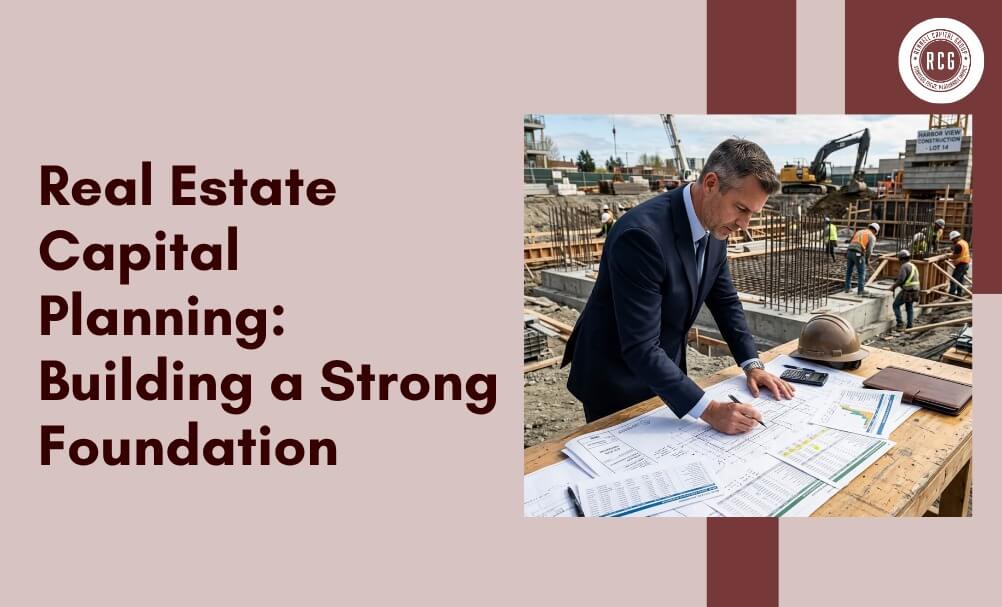
Many development projects are shaped by the decisions made before construction even begins. Careful financial planning is one of the most important parts of that early preparation. A clear understanding of project costs, funding requirements, and potential risks helps developers stay organized and make confident decisions via project. Without that preparation, unexpected expenses and financial challenges may create delays and put more pressure on overall budget.
This is where real estate capital planning becomes vital. It may help developers organize funding, forecast expenses, evaluate risks, and align financial resources with project goals and timelines. A well-structured capital plan gives a clearer picture of how resources will be used from start to finish, may help teams stay on track and may avoid costly surprises. Beyond securing funding, effective capital planning is about making informed financial decisions which support project’s long-term success.
What Is Real Estate Capital Planning?
Real estate capital planning involves organizing and managing the financial resources needed to support a development project from start to finish. It gives a clear framework for how the project will be funded, how resources will be allocated, and how financial needs will be managed via different stages of development. This planning process may help create a stronger financial foundation and supports better decision-making as the project moves forward.
It is important to understand the difference between funding and planning. Funding is simply the acquisition of capital; securing a loan, bringing in equity partners, or utilizing cash reserves. Planning, on the other hand, is the strategic roadmap that dictates exactly when and how that funding will be used. Securing millions of dollars in project financing is useless if the capital allocation strategy is flawed and the funds dry up before the project reaches the stabilization phase.
Planning before funds are put into a project is important because financial decisions become much harder to adjust once construction is underway. A well-prepared plan helps developers understand how resources will be used, estimate costs more accurately, and make sure funding is available throughout the project. It also helps determine the most suitable financing approach and ensures that money is available at each stage of development, reducing the risk of delays caused by funding gaps or unexpected cash flow issues.
Why Capital Planning Matters in Real Estate Development
A well-executed development funding strategy is the difference between a project that thrives and one that stalls. Real estate development is inherently complex, and capital planning provides the necessary framework to navigate this complexity successfully.
Supports Better Financial Decisions
Strong financial planning helps developers make decisions with greater confidence throughout a project. When there is a clear knowing of budgets, funding needs, and financial goals, it becomes easier to check options and choose the best path forward. This approach helps teams stay focused on priorities, avoid unnecessary expenses, and make better use of some resources from the beginning of the project to its completion.
Helps Reduce Project Risk
No development project is completely free from challenges. Changes in material prices, supply delays, labor availability, and other unexpected factors can affect both timelines and budgets. Recognizing these risks early gives developers an opportunity to plan ahead and reduce their impact. Setting aside contingency funds, that allow room in the budget for unexpected costs, and preparing for possible schedule adjustments can help keep a project on track and financially secure via development process.
Improves Budget Accuracy
A strong budget provides a clear financial roadmap for a real estate project. Rather than relying on rough projections, developers take the time to know costs involved at every stage of the project. This includes everything from purchasing land and securing permits to construction, professional services, and project-related expenses. Careful budgeting may help create a more realistic financial plan and makes it easier to manage costs throughout the development process.
Creates Long-Term Stability
Real estate development is even viewed as a long-term investment. Although construction is an important stage, the goal is to deliver a property that remains financially viable and performs well for years after completion. Effective capital planning helps developers assess the financial outlook of a project and know how it is expected to perform once it becomes operational. It even takes future expenses into account, including maintenance, building operations, and efficiency-related costs, all of which can influence the property’s long-term value and financial health.
Key Components of a Strong Capital Planning Strategy
To be effective, a capital planning strategy must cover every financial aspect of the development lifecycle. This involves several critical components that work together to form a cohesive financial framework.
Development Budgeting
Development budgeting involves identifying and estimating the costs expected via project. These expenses may include construction costs, design and consulting fees, permits, legal services, financing expenses, and other project-related needs. A detailed budget may give a clear financial picture from beginning and serves as a reference point for managing costs and making financial decisions as the project goes on.
Funding Structure Planning
Once budget is established, developers must determine the most efficient way to pay for it. Funding structure planning involves deciding the optimal ratio of debt to equity. Too much debt may overuse the project and increase risk, while too much equity may dilute the sponsor’s returns. Finding the right balance, even through a mix of senior loans, mezzanine debt, and preferred equity is vital for maximizing the project’s financial performance.
Risk Assessment
A thorough risk assessment helps developers identify factors that could affect a project’s financial performance. These risks may include changes in interest rates, shifts in market demand, construction delays, or rising project costs. Certain potential challenges early may give project teams more time to plan ahead, check varied options, and put measures in place that may help reduce financial uncertainty throughout the development process.
Cash Flow Forecasting
Having access to funds at the right time is as important as having enough funding overall. Cash flow forecasting helps developers understand when project expenses are expected to occur and when funds will be needed throughout different stages of the project. This planning process helps keep payments aligned with project schedules, supports smoother operations, and lessens the risk of delays caused by temporary cash flow shortages.
Contingency Reserves
Unexpected costs are a common part of real estate development, regardless of how a project is planned rightly. Changes in material prices, design adjustments, certain delays, or sudden site conditions can all affect the budget. Setting aside contingency funds may developers handle these situations without any project disruption. Having a financial buffer in place may give greater flexibility and may help keep work moving forward when unexpected expenses arise.
Common Mistakes in Real Estate Capital Planning
Even experienced developers can fall victim to missteps if they rush the planning process. Understanding common errors is the first step toward avoiding them.
One of the most frequent mistakes is underestimating project costs. Optimism bias can lead developers to assume best-case scenarios for material pricing and labor availability. When reality sets in, the budget quickly falls short.
Poor cash flow planning is another major pitfall. A project might be fully funded on paper, but if the capital cannot be accessed at the exact moment it is needed to pay contractors, the job site will shut down.
A lack of contingency reserves leaves a project entirely exposed to the elements. Without a financial buffer, even a small delay or a small spike in material costs may force developer to seek expensive rescue capital.
Misaligned funding timelines even plague many projects. If an equity partner’s capital call schedule does not align with the lender’s draw schedule, the project can easily face temporary insolvency.
Finally, overleveraging projects is a classic error. Relying too heavily on debt might amplify potential returns, but it drastically reduces the margin for error. If the market softens or lease-up takes longer than expected, an overleveraged project can quickly fall into foreclosure.
Step-by-Step Building a Real Estate Capital Planning
Creating a comprehensive real estate capital planning framework requires a methodical approach. By following a structured process, developers can ensure that no financial detail is overlooked.
Step 1: Define Project Goals
The starting point of any real estate planning process is understanding the project’s goals. Developers need to determine what they want to achieve from the investment, whether that means selling the property after completion or holding it as a long-term asset.
Step 2: Estimate Total Development Costs
Using historical data, contractor estimates, and market research, compile a comprehensive list of all expected costs. Ensure that this estimate includes land costs, soft costs, hard costs, financing fees, and a healthy contingency reserve.
Step 3: Analyze Funding Sources
Check varied avenues available for project financing planning. Compare the terms of traditional bank loans, private credit funds, and institutional equity partners. Select a capital stack that offers the best blend of flexibility, cost-effectiveness, and alignment with the project’s defined goals.
Step 4: Build a Cash Flow Timeline
Create a month-by-month schedule detailing when expenses will be incurred and when funding will be drawn to cover those expenses. This timeline must account for the initial equity deployment, subsequent debt draws, and the eventual stabilization or sale of the asset.
Step 5: Stress Test Financial Assumptions
A strong financial plan should account for different scenarios, not just the most optimistic outcome. Developers even review how the project would perform if costs increase, timelines extend, financing becomes more expensive, or revenue falls below expectations. Looking at these possibilities in advance may help identify potential weaknesses in the plan and gives an opportunity to make adjustments before the project moves forward.
Step 6: Monitor and Adjust During Execution
Financial planning is an ongoing process through a development project. As work progresses, it is important to keep track of spending, review budgets regularly, and update financial projections when project schedules or costs change.
The Relationship Between Real Estate Capital Planning and Risk Management
Risk management is intrinsically linked to real estate capital planning. Every financial decision made during the planning phase directly influences the project’s risk profile.
Considering market risk. A thorough plan will account for the possibility of a softening market by securing long-term, fixed-rate financing rather than short-term variable debt, protecting the project from interest rate spikes during the lease-up phase.
Construction delays can affect both project timelines and finances, which is why they are even considered during planning stage. By analysing potential risks in advance, developers can prepare for possible setbacks and include financial reserves in their budget to help manage additional costs if the project takes longer than expected.
Rising project costs are one of the other challenges that developers even have to manage, especially when material prices fluctuate unexpectedly. Including contingency funds in the budget from the beginning can help provide a financial cushion when costs increase.
How Real Estate Capital Planning Supports Long-Term Portfolio Growth
While the success of an individual project is important, capital planning also plays a major role in supporting long-term growth across an entire real estate portfolio. Developers who want to expand their operations need a structured approach to managing finances rather than relying on project-by-project funding decisions.
Growth becomes easier to manage when there is a consistent process for evaluating, financing, and overseeing projects. A clear capital planning framework helps developers make decisions more efficiently and manage multiple developments at the same time with greater confidence.
Effective use of capital is crucial. Careful planning helps ensure that funds are allocated where they may create most value, while also providing flexibility to pursue future opportunities.
Strong capital planning helps developers make more informed and disciplined investment decisions. With clear financial goals in place, it becomes easier to assess opportunities, prioritize the right projects, and avoid investments that may not support long-term objectives.
Why Professional Advisory Matters in Real Estate Capital Planning
Searching the complexities of development finance requires specialized expertise. Many developers are best at finding great sites and managing construction, but managing the intricacies of capital markets is a different skill set altogether.
Professional advisory gives independent financial analysis, ensuring that the developer’s assumptions are realistic and market-aligned. Advisors bring a wealth of experience and relationships with lenders and equity partners, which is invaluable when structuring complex capital stacks. Later, they provide strategic oversight, ensuring that the capital plan is continuously optimized as the project evolves.
Working with an experienced capital advisory team like Rennell Capital Group can help developers create more structured financial plans that align with both project goals and execution realities.
Building for the Future
Successful real estate projects rely on more than just well-designed plans and construction expertise. A solid financial framework is equally important, may help in guide budgeting, funding decisions, risk management, and overall project management from start to finish.
A structured real estate capital planning strategy helps developers make informed decisions, allocate resources more effectively, and prepare for challenges before they impact project performance.
At Rennell Capital Group, our Capital Advisory team works closely with developers, investors, and property owners to create thoughtful financial strategies that align capital planning with real-world project execution. Through disciplined analysis and structured oversight, we help clients approach development with greater clarity, confidence, and control.
When capital planning is approached strategically, projects are better positioned for long-term stability and sustainable growth.
Looking for fresh content?
Get articles and insights from our weekly newsletter.
Recent Posts

Get a Free Quote Today!