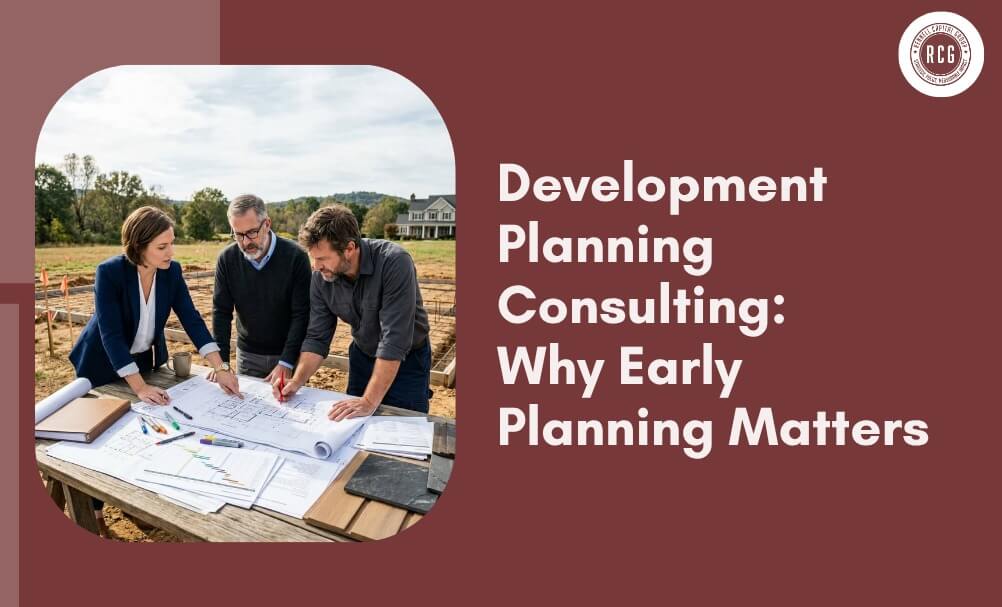
When starting a project, the first decisions are made outside of the building site. There are bounds placed on available budgets and lands, and risk assessments are performed. The duration of the project is also determined. These decisions are made during the planning stage. They are critical to the success of the project, and changing them after the project has begun will lead to additional time and cost.
Development planning consulting helps builders, money people, and landowners. It sets a strong base before any building starts. It checks if the idea can really work. It makes a clear money plan. It sets a time schedule. It looks hard at the risks. All these parts come together in one clear process. This gives every project a better path. If you skip this step, you are only guessing.
This post tells you what development planning consulting means. It shows why planning early is so useful. It also shows the trouble that can come when people skip it. The guide works if this is your first project or if you have done many before. You will learn simple ways to plan with more clear thinking and more trust in your choices. Good planning saves time, money, and stress for everyone involved.
What Is Development Planning Consulting?
Development planning consulting is a professional service that supports the early stages of a project before design is finalized and before construction begins.
A development planning consultant helps clients evaluate whether a project is viable, how much it will cost, how long it will take, and what risks are involved. This is very different from construction management, which focuses on executing a plan that already exists. Development planning consulting is about building that plan in the first place.
Key activities include:
- Reviewing project feasibility
- Preparing preliminary budgets
- Developing project timelines
- Identifying and managing risks
- Coordinating between stakeholders and advisors
This type of consulting is common in real estate development planning, mixed-use projects, commercial construction, and large-scale infrastructure developments. The goal is simple: give decision-makers the information they need before committing significant capital.
Why Early Planning Matters in Development Projects
Poor planning doesn’t just create inconvenience it creates cost. The further a project progresses without a solid plan, the more expensive it becomes to correct course. Here’s why front-end investment in planning pays off.
Creates More Accurate Budgets
Early budgeting helps developers understand what a project will actually cost, not just what they hope it will cost. A detailed project budgeting strategy at the start of a project reduces the risk of surprise costs later. It also supports better conversations with lenders and investors, since realistic financial projections build confidence and credibility.
Reduces Project Delays
Delays are often caused by problems that weren’t anticipated permit issues, site constraints, supply chain gaps, and coordination failures. Early planning identifies these potential bottlenecks and gives the project team time to address them. According to the Project Management Institute (PMI), structured planning processes are directly linked to improved project delivery outcomes.
Improves Decision-Making
Good decisions require good information. Pre-development planning gives decision-makers a clearer picture of project viability, financial performance, and risk exposure. That clarity leads to faster, more confident decisions and fewer costly reversals down the line.
Helps Manage Project Risks
Every development carries risk. The key is knowing what those risks are before they become problems. A thorough development risk assessment during the planning phase gives teams the opportunity to mitigate, transfer, or accept risks with a clear strategy in place rather than reacting to them under pressure.
Key Services Included in Development Planning Consulting
Development planning consulting covers a broad range of services. Here’s what each one typically involves and why it matters.
Feasibility Analysis
Project feasibility consulting evaluates whether a proposed development makes financial, physical, and regulatory sense. This includes reviewing market conditions, analyzing comparable projects, and assessing whether the numbers work given the current cost and revenue environment.
For example, a developer considering a mixed-use project in a suburban corridor would use a feasibility study to determine whether rental demand supports the project, whether construction costs align with projected returns, and whether the site is suitable.
Site Evaluation
Site development planning involves reviewing the physical characteristics of a property its location, zoning classification, soil conditions, access, and proximity to infrastructure. A thorough site evaluation can reveal issues that would significantly affect project cost or viability, such as environmental concerns or inadequate utility access.
Budget Development
A comprehensive project budgeting strategy covers hard costs (construction), soft costs (design, permits, consulting fees), contingency allowances, and financing costs. Preparing this budget early gives developers a realistic view of total project investment and helps prevent the underestimation that leads to funding shortfalls.
Capital Planning
Capital planning strategy connects the project’s financial requirements with the right funding sources debt, equity, or a combination of both. The National Institute of Building Sciences highlights the importance of aligning capital planning with lifecycle analysis to optimize facility investments over time. Getting this structure right early reduces financing risk and improves long-term returns.
Working with an experienced capital advisory team helps developers strengthen early planning, improve financial coordination, and reduce project risks before construction begins.
Scheduling Strategy
A project schedule is more than a list of dates. A well-developed scheduling strategy sequences every phase of the project from design and permitting through procurement and construction so that dependencies are understood and delays can be spotted early.
Risk Assessment
A structured development risk assessment identifies threats across the project: financial, regulatory, environmental, and construction-related. With risks identified and documented, the team can put mitigation strategies in place before those risks materialize.
Common Problems That Early Planning Helps Prevent
Development planning consulting is, in many ways, a form of prevention. Here are the most common problems that arise when planning is rushed or skipped altogether.
Budget Overruns
The most frequent cause of budget overruns is inadequate cost planning at the outset. When contingencies are too small or cost categories are missed entirely, the gap between projected and actual costs can grow quickly sometimes threatening the viability of the entire project.
Poor Site Selection
A site that looks promising on paper can create serious complications once due diligence is completed. Environmental contamination, inadequate infrastructure, zoning restrictions, or poor access can all inflate project costs. Site evaluation during the planning phase helps avoid these surprises.
Permit Delays
Permitting is one of the most common sources of delay in construction planning consulting projects. Early engagement with local authorities, combined with a clear understanding of regulatory requirements, significantly reduces the risk of hold-ups that push timelines out by weeks or months.
Design Changes During Construction
When design decisions are deferred until construction is underway, changes become far more expensive. Rework, material waste, and contractor downtime all add up. Thorough pre-development planning locks in key decisions before costs escalate.
Cash Flow Problems
A project may be financially viable on paper but still run into serious cash flow problems if the capital planning strategy doesn’t account for timing. Knowing when capital is needed and having it available is essential for keeping a project on track.
Communication Gaps
Poor communication between developers, designers, consultants, and contractors creates confusion, duplicated work, and costly mistakes. Development planning consulting establishes clear roles, responsibilities, and communication protocols from the start, keeping all parties aligned throughout the project.
A Step-by-Step Development Planning Process
Every project is different, but the core planning process follows a consistent structure.
Step 1: Define Project Goals
Start by clearly articulating what success looks like. What type of development is this? What are the financial targets? What is the intended timeline? Clear goals shape every decision that follows.
Step 2: Evaluate the Site
Conduct a thorough site evaluation covering zoning, environmental conditions, infrastructure, and market context. This step validates whether the chosen site can actually support the proposed project.
Step 3: Prepare Preliminary Budgets
Develop a detailed budget that covers all cost categories hard costs, soft costs, contingencies, and financing. Use realistic unit costs based on current market data, not optimistic assumptions.
Step 4: Review Project Risks
Complete a structured development risk assessment. Rank risks by likelihood and potential impact, and assign mitigation strategies for each significant risk identified.
Step 5: Develop a Project Timeline
Create a master schedule that sequences all phases of the project. Identify critical path activities those that directly affect the project completion date and build in appropriate buffers.
Step 6: Finalize the Development Plan
Bring all outputs together into a comprehensive development plan that aligns financial goals with project execution. This document serves as the reference point for all stakeholders throughout the life of the project.
How Development Planning Consulting Supports Better Investment Decisions
Strong development consulting services don’t just improve how projects are built they improve how investment decisions are made.
A well-structured capital planning strategy gives investors and developers a clear view of financial exposure, projected returns, and funding requirements. This clarity makes it easier to secure financing, attract equity partners, and manage stakeholder expectations.
Project planning strategy also supports better coordination across the project team. When everyone is working from the same plan with aligned budgets, schedules, and risk registers the project runs more smoothly and the chances of expensive surprises drop significantly.
For developers managing multiple projects simultaneously, this structured approach to real estate development planning also enables better portfolio-level decision-making. Resources can be allocated more effectively, and capital can be deployed where it generates the best returns.
Common Planning Mistakes Developers Should Avoid
Even experienced developers fall into predictable planning traps. Here are the ones worth watching for.
Skipping Feasibility Studies
Project feasibility consulting is sometimes seen as an unnecessary expense, especially when a developer is confident in a project’s potential. This confidence can be costly. A feasibility study often surfaces constraints that aren’t visible during initial site visits or financial modeling.
Underestimating Costs
Optimism bias is common in early-stage development. Costs are underestimated, contingencies are too thin, and the result is a funding gap that appears mid-project. Rigorous project budgeting strategy, informed by current market data, prevents this.
Ignoring Local Regulations
Zoning laws, building codes, and permitting requirements vary significantly by jurisdiction. Failing to understand these requirements early can lead to redesigns, permit rejections, or project cancellations. Construction planning consulting should always include a thorough regulatory review.
Poor Schedule Planning
Schedules that don’t account for realistic lead times, permit durations, or contractor availability quickly fall apart. A detailed scheduling strategy built during the planning phase gives the project team a credible roadmap rather than an aspirational one.
Weak Risk Management
Risk management that exists only on paper without active monitoring, assigned owners, or mitigation strategies provides little protection. Effective development risk assessment is ongoing, not a one-time exercise.
The Connection Between Planning and Long-Term Project Success
The relationship between early planning and long-term project performance is well established. Projects that invest in thorough pre-development planning consistently deliver better financial outcomes, fewer delays, and smoother construction processes.
Site development planning, when done well, ensures that the physical and regulatory context of a project is fully understood before design progresses. This reduces costly redesigns and helps contractors work more efficiently.
Real estate development planning that integrates financial modeling, risk assessment, and scheduling creates alignment across all stakeholders from developers and investors to designers and contractors. That alignment reduces uncertainty, speeds up decision-making, and builds confidence at every stage of delivery.
Why Professional Development Planning Consulting Matters
There’s a meaningful difference between planning done in-house and planning supported by experienced consultants. Development planning consulting brings an objective perspective to project evaluation free from the optimism bias that often affects internal teams.
Professional consultants also bring structured methodologies, market knowledge, and cross-project experience that are difficult to replicate internally. They’ve seen what goes wrong and know where to look for problems before they become crises.
For developers and investors working on complex or high-value projects, the cost of professional development consulting services is typically a fraction of what poor planning ends up costing.
Key Takeaways
A strong development project starts with good decisions before construction begins. Early planning helps developers understand the project goals, budget, schedule, and possible risks. It also gives the team time to deal with problems before they lead to delays or extra costs.
Development planning consulting brings the main parts of a project together. This can include checking if the plan is practical, setting a clear budget, planning how funds will be used, and keeping the project team organized. With these details in place, developers can make decisions with better information.
At Rennell Capital Group, our Capital Advisory team works with developers, investors, contractors, and property owners during the planning process. We help clients review project needs, organize financial plans, and connect those plans with the work ahead.
Starting early gives a project a clearer path. With careful planning and regular review, teams can prepare for challenges and keep the project focused from planning through completion.