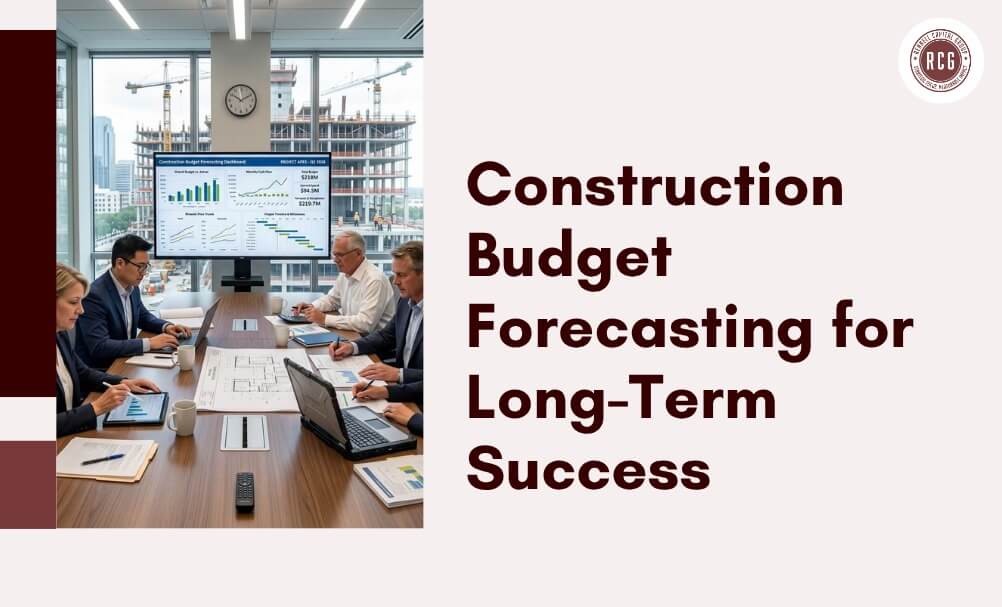
Construction budgets rarely behave in a way owners hope. Material prices swing, labor markets tighten, and a single design change may ripple across an entire project’s bottom line. That’s why exactly construction budget forecasting has now become most valuable disciplines.
Forecasting may give owners and contractors a clear financial picture before crews ever break ground. It connects past performance with future conditions, that helps teams plan for what’s coming rather than reacting after the money runs out.
In this guide, you will learn what construction budget forecasting really involves, why it matters, and how to do it well. We’ll break down the key components, the tools that support it, common pitfalls, and the trends shaping its future. If you own project or build it, accurate forecasting may be the difference between a smooth delivery and a costly surprise.
What Is Construction Budget Forecasting?
Construction budget forecasting is the process of estimating how project costs are likely to change from the planning stage via completion. Rather than looking only at today’s costs, it may consider factors such as past project data, current market conditions, labor rates, material prices, and potential risks that could affect the budget over time.
Although forecasting and cost estimating are closely related, they serve different purposes. A cost estimate provides an expected project cost based on the information available at a specific point in time. Budget forecasting goes a step further by tracking how costs may change as the project progresses, that gives stakeholders a clearer picture of the project’s financial outlook from start to finish.
Quick definition: Construction budget forecasting is the ongoing process of predicting a project’s future costs using historical data, market trends, and risk analysis to support financial planning and decision-making across the entire project lifecycle.
Why Construction Budget Forecasting Matters
Construction budget forecasting is the process of estimating how project costs are likely to change from the planning stage via completion. Rather than looking only at today’s costs, it may consider factors such as past project data, current market conditions, labor rates, material prices, and potential risks that could affect the budget over time.
Although forecasting and cost estimating are closely related, they serve different purposes. A cost estimate provides an expected project cost based on the information available at a specific point in time. Budget forecasting goes a step further by tracking how costs may change as the project progresses, that gives stakeholders a clearer picture of the project’s financial outlook from start to finish.
Key Components of Construction Budget Forecasting
Strong forecasting rests on several connected building blocks. Each one adds accuracy, and together they create a complete financial picture for your project.
Historical Cost Data Analysis
The best predictor of future costs is often past performance. Reviewing previous project costs gives you a baseline for what similar work should run. Benchmarking against comparable builds may help you spot whether your numbers are realistic or wishful thinking.
Performance metrics matter here too. Tracking how projects performed earlier against budgets may reveal patterns where estimates ran short, contingencies got used, and where teams came in.
Material Cost Forecasting
Material costs can change quickly, making them one of the hardest parts of a construction budget to predict. Prices for products such as steel, copper, lumber, and concrete often fluctuate because of market conditions, demand, and availability.
Supply chain issues may also affect costs. Delayed deliveries, material shortages, or limited availability may need contractors to source materials from varied suppliers or pay huge price to keep the project on schedule.
Labor Cost Forecasting
Labor is one of the biggest factors influencing both construction costs and project schedules. When skilled workers are in short supply, contractors may face higher wages, increased competition for labor, and delays in securing the right crews. A reliable budget forecast should take current labor market conditions into account and know how they may change during the course of the project.
Labor productivity is equally important. The amount of work a crew can complete depends on several factors, including experience, weather conditions, site access, and the complexity of right project.
Equipment and Operational Costs
Equipment rentals, fuel, and day-to-day operational expenses often get underestimated. Rental rates fluctuate, and long projects can rack up far more equipment time than planned. Fuel prices add their own unpredictability.
Folding these operational costs into your forecast prevents the slow leaks that drain budgets over months of work. Even small daily expenses add up across a project lifecycle.
Contingency Planning
No construction budget is complete without setting aside funds for the unexpected. Even well-planned projects may encounter unforeseen site conditions, even change in regulations, material price increases, or even issues that affect costs.
That’s where contingency funds come in. They aren’t added to inflate the budget, they’re a practical safeguard for risks that can’t be predicted with certainty.
The right contingency depends on the project itself. A complex renovation or a project with many unknowns will usually require a larger reserve than a straightforward new build. Planning for these possibilities from the outset helps teams respond to unexpected challenges without putting the entire project budget at risk.
The Difference Between Budget Forecasting and Cost Estimating
These two practices work together, but they’re not the same. Estimating sets the starting point. Forecasting keeps you informed as the project unfolds.
| Cost Estimating | Budget Forecasting |
|---|---|
| Initial cost prediction | Future cost projection |
| Project startup focus | Entire project lifecycle |
| Quantity-based | Trend-based |
| Bid support | Financial planning |
Think of estimating as your snapshot and forecasting as your moving picture. You need both to manage a project’s finances well.
How Forecasting Improves Long-Term Project Success
Good forecasting helps teams stay on top of cash flow throughout a project. Knowing when costs are likely to occur which makes it easier to plan funding, schedule payments, and avoid unnecessary financial pressure as work moves forward.
It also gives teams the chance to respond before small budget issues become larger ones. By reviewing forecasts regularly and comparing them with actual project costs, adjustments may be made early instead of waiting until the budget is already under strain.
Reliable forecasting also gives lenders, investors, and project partners greater confidence. When financial decisions are based on realistic numbers and projects stay on track, it builds trust.
Common Challenges in Construction Budget Forecasting
Even the best teams face obstacles. Inflation tops the list, quietly eroding purchasing power and inflating every line item. Market volatility increases problem, that makes prices swing in ways that are hard to predict.
Design changes throw forecasts off balance. Each revision can shift quantities, materials, and labor needs. Scope creep those small additions that pile up over time has a similar effect, often without anyone noticing until the budget feels tight.
Technology’s Role in Construction Budget Forecasting
Technology has changed the way construction teams plan and manage project budgets. Today’s tools make it easier to keep cost information up to date, respond to design changes, and improve the accuracy of financial planning throughout a project.
Building Information Modeling (BIM) connects design information with cost data, allowing teams to see how design changes may affect the budget. Construction estimating software and cost databases even provide current pricing information, helping estimators prepare budgets using more accurate and up-to-date data.
Many forecasting tools now automate calculations that once had to be done manually, saving time and reducing the risk of errors.
Cloud-based platforms have also improved collaboration by giving owners, contractors, designers, and consultants access to the same project information. With everyone working from the latest data, communication becomes efficient, decisions can be made more quickly, and the chances of costly misunderstandings are reduced.
Best Practices for Accurate Construction Budget Forecasting
Accurate forecasting isn’t just about having the right tools; it’s also about following consistent practices throughout a project.
- Review the budget regularly – Project costs change over time, so forecasts should be updated as new information becomes available.
- Keep an eye on market conditions – Material prices, labor costs, and supply chain issues can all affect the budget. Staying informed helps teams respond before these changes have a major impact.
- Evaluate risks throughout the project – New challenges can arise at any stage, so it’s important to identify potential risks early and adjust plans when needed.
- Encourage collaboration – Estimators, project managers, finance teams, and other stakeholders often have different insights. Bringing those perspectives together leads to more accurate forecasting.
- Base decisions on current data – Using reliable project information and market data helps teams make informed decisions instead of relying on assumptions.
The more consistently these practices are followed, the more accurate and dependable project forecasts become over time.
How Owners and Contractors Benefit From Forecasting
Forecasting delivers value on both sides of the table, though in slightly different ways.
For owners, it sharpens capital planning. Knowing future costs helps allocate funds wisely and time investments well. It also builds investment confidence, making it easier to commit to projects and attract financing.
For contractors, forecasting protects profitability. Anticipating cost shifts means fewer margin surprises. It works for project controls, giving teams the data they want to manage work in right manner. The outcome is more predictable than ever.
Why Professional Cost Consultants Improve Forecast Accuracy
Experienced cost consultants add a layer of rigor that’s hard to match in-house. They give you independent cost validation, look for assumptions against real market data and flagging numbers that don’t hold up.
Their industry expertise runs deep. Consultants look for many projects across many sectors, so they know cost drivers most teams encounter only occasionally. That broad market knowledge may keep forecasts grounded in reality.
Perhaps most valuable is their skill at risk identification. A seasoned consultant knows where projects tend to go sideways and builds those risks into the forecast before they surface. That foresight often pays for itself many times over.
Future Trends in Construction Budget Forecasting
The discipline keeps evolving, and several trends are reshaping how teams plan.
Predictive Analytics
Predictive analytics makes use of historical and market data to project likely cost outcomes with growing precision. Instead of reacting to changes, teams can anticipate them and plan accordingly.
AI-Based Forecasting
Artificial intelligence is making forecasts faster and more accurate. AI models process enormous datasets, learning from past projects to refine future predictions and catch subtle risks early.
Real-Time Cost Intelligence
Live data feeds now let teams track costs as they change. Real-time cost intelligence means a forecast can update the moment a price shifts, keeping decisions current.
Integrated Cost Planning Platforms
Unified platforms bring estimating, forecasting, and project controls into one system. This integration removes data silos and gives everyone a single source of truth.
Data-Driven Project Controls
Project controls are becoming fully data-driven, linking budgets, schedules, and performance metrics. The result is tighter oversight and fewer surprises across the project lifecycle.
Building Financial Certainty Into Every Project
Construction budget forecasting is not something that’s done once and forgotten. It is an ongoing process that helps project teams understand how costs are changing and make informed financial decisions throughout the life of a project.
At Rennell Capital Group, we work with owners, developers, and contractors to support better financial planning through construction estimating, MEP consulting, preconstruction services, owner representation, and capital advisory. Our goal is to help clients make fast decisions, manage project costs, and move forward with greater confidence at every stage of construction.
Frequently Asked Questions
What is construction budget forecasting?
Construction budget forecasting is the process of predicting future project costs using historical data, market trends, labor rates, and financial planning strategies. It guides decisions across the entire project lifecycle.
Why is budget forecasting important in construction?
Budget forecasting helps control costs, reduce risk, improve decision-making, and increase the likelihood of project success. It gives owners and contractors a clear financial picture before and during a build.
How often should construction budgets be forecasted?
Budgets should be reviewed regularly throughout the project lifecycle, especially when market conditions or project scope change. Frequent updates keep the forecast accurate and useful.
What factors affect construction budget forecasting?
Material pricing, labor costs, project scope, inflation, supply chain conditions, and market trends all influence forecast accuracy. Each can shift quickly, so ongoing monitoring matters.
Can budget forecasting reduce project overruns?
Yes. Accurate forecasting helps teams identify risks early, make informed decisions, and maintain financial control throughout the project, reducing the chance of costly overruns.

Looking for fresh content?
Get articles and insights from our weekly newsletter.
Recent Posts
Discuss a Project today!