Construction costs keep climbing, and margin for error may keep shrinking. Material prices vary month to month, labor markets tighten without any warning, and a single miscalculated bid may wipe out a project’s profit.
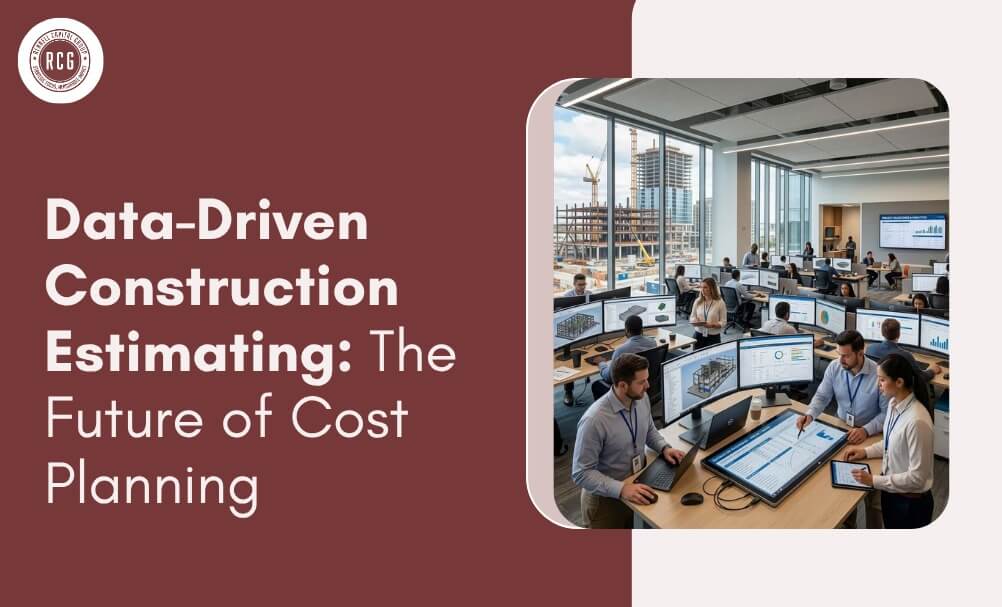
Data-Driven Construction Estimating offers a smarter path forward. Instead of relying on gut instinct unit prices, modern estimators tap into real numbers historical project records, live market pricing, and labor productivity metrics to build estimates you may actually trust. This shift is reshaping how the entire industry approaches construction cost planning.
In this guide, you’ll learn what data-driven estimating really means, how it evolved, the data sources that power it, and the practical benefits it delivers. You’ll also see how predictive analytics and BIM are pushing cost forecasting into a new era and how to put these ideas to work on your next project.
What Is Data-Driven Construction Estimating?
Data-driven construction estimating is an approach that uses real project data to develop more cost estimates. Rather than primarily relying on assumptions or outdated figures, estimators use information from past projects, current market conditions, and labor performance to build budgets that reflect actual project costs.
Several types of data play an important role in this process:
- Historical project data gives insight into what similar projects actually cost, helping teams compare current work with previous experience.
- Current market pricing may keep estimates aligned with changing costs for materials, equipment, and subcontracted work, reducing the risk of using outdated pricing.
- Labor productivity data may help estimate how much time different tasks are likely to require based on crew performance, project complexity, and site conditions.
Construction costs may change fast, and even small inaccuracies can have a major impact on project budgets.
How Construction Estimating Has Evolved Over Time
The journey toward data-driven methods didn’t happen overnight. Estimating has moved through three distinct phases, each more precise than the last.
Traditional Estimating Methods
For many years, construction estimators relied on paper drawings, scale rulers, printed cost guides, and their own experience to prepare estimates. Quantities were measured by hand, plans were marked up manually, and much of the process based on individual judgment and expertise.
Digital Estimating Platforms
Spreadsheets transformed construction estimating by simplifying calculations and organizing cost data. Later, specialized software and digital takeoff tools further improved accuracy and efficiency, allowing estimators to measure directly from digital plans, reduce manual errors, and produce more consistent estimates across projects.
The Rise of Data Analytics and Predictive Modeling
Today, data analytics in construction has changed the game entirely. Estimating software solutions now pull from massive databases, learn from past projects, and flag risks before they become problems. Predictive cost modeling lets teams forecast how prices might move months down the line.
Why Data Matters in Construction Cost Planning
Solid data does more than make estimates look professional. It protects your bottom line through four key benefits:
- Cost certainty: You know what a project will cost before you commit, not after the surprises pile up.
- Budget control: Real numbers may help you set realistic budgets and stick to them.
- Forecasting accuracy: Construction cost forecasting becomes reliable when it’s built on patterns, not hunches.
- Risk reduction: Data exposes weak spots in a scope before they turn into change orders.
Consider a contractor who assumes copper pricing will hold steady through a 14-month project. If copper jumps 18% mid-build and that escalation wasn’t priced in, the resulting overrun can swallow the entire profit margin. Data-driven estimating would have flagged that material escalation risk during preconstruction giving the team time to lock in pricing or adjust the bid.
Key Data Sources Used in Modern Construction Estimating
The strength of any estimate comes down to the quality of its inputs. Six data sources form the backbone of modern estimating.
Historical Project Cost Data
Past projects are a goldmine. By analyzing what comparable jobs actually cost, estimators establish realistic benchmarks. This historical record is the single most valuable asset for improving cost estimation accuracy over time.
Labor Productivity Metrics
Labor is one of the most variable costs on any job. Productivity data, how many units a crew can install per hour under specific conditions turns labor estimating from a guess into a calculation.
Material Pricing Databases
Material costs change constantly. Live pricing databases keep estimates current, so a quote prepared today reflects today’s market rather than last quarter’s.
Supplier and Vendor Information
Pricing, lead times, and availability from suppliers shape both cost and schedule. Tracking this information helps teams plan procurement and avoid delays that quietly inflate budgets.
BIM Models and Digital Drawings
BIM estimating connects cost data directly to a 3D model. Quantities flow straight from the design, dramatically reducing manual takeoff errors and speeding up the whole process.
Market Trends and Economic Indicators
Interest rates, inflation, and regional construction demand all influence pricing. Folding economic indicators into preconstruction cost analysis adds a layer of construction cost intelligence that pure project data can’t provide.
The Role of BIM in Data-Driven Estimating
Building Information Modeling (BIM) has now become central to data-driven estimating. A BIM model is a database of every component in a building.
That richness drives several estimating advantages. BIM-based quantity takeoffs pull measurements directly from the model, so estimators spend less time counting and more time analyzing. Automated quantity extraction removes much of the manual labor that introduces errors. Clash detection catches conflicts between systems like a duct running through a beam before they become costly field problems. And better coordination between design and estimating teams may be everyone working from the same source of truth.
For projects involving complex mechanical, electrical, and plumbing systems, quantity takeoff technology tied to BIM can be the difference between a tight bid and a money-loser.
How Predictive Analytics Improves Cost Forecasting
Predictive cost modeling is where estimating starts to feel like looking around every corner. Rather than pricing what is happening now, predictive analytics may use historical patterns and market signals to forecast what’s coming.
This matters in several ways. Teams can anticipate material escalation trends, pricing in likely increases for steel, copper, or lumber over a multi-year build. They can read labor market conditions to predict wage pressure in a given region. And they can run scenario planning, modeling how different design choices or schedule changes would affect the final number.
Project cost forecasting built on these methods gives owners and contractors a realistic range rather than a single optimistic figure. That honesty up front prevents painful conversations later.
Common Challenges in Data-Driven Construction Estimating
The approach is not without any issues. Knowing them helps you plan around them:
- Poor data quality: Garbage in, garbage out. Bad source data undermines even the best software.
- Outdated databases: Price books and productivity rates lose value fast if no one maintains them.
- Integration issues: Getting estimating tools to talk to accounting, scheduling, and BIM might be messy.
- Training needs: Staff need time and support to use new platforms properly.
- Technology adoption hurdles: Long-time teams may resist changing methods that have worked for years.
Best Practices for Implementing Data-Driven Construction Estimating
A successful rollout based on discipline as much as software. Focus on these practices:
These cost planning strategies turn a one-time software purchase into a lasting competitive edge.
- Standardize your estimating processes so every project follows the same reliable workflow.
- Maintain your cost databases with regular updates to pricing and productivity data.
- Invest in the right software that fits your project types and integrates with your existing tools.
- Schedule regular estimate reviews to catch errors and learn from variances.
- Encourage cross-team collaboration between estimating, project management, and field crews so data flows both ways.
Why Contractors Are Investing in Data-Driven Cost Planning
The business case is hard to ignore. Contractors who embrace data-driven methods gain a real competitive advantage, since their bids are both sharper and safer. They submit more accurate bids that win work without sacrificing margin. They achieve reduced project risk by spotting trouble early. They enjoy improved profitability through fewer overruns. And they make faster preconstruction decisions because the data is ready when questions arise.
In an industry where the Associated General Contractors of America tracks ongoing pressure on labor and material costs, sharper construction cost optimization isn’t a luxury; it’s survival.
Future Trends in Data-Driven Construction Estimating
The pace of change is only accelerating. Five developments are shaping what comes next.
Artificial Intelligence
AI construction estimating analyzes enormous datasets to suggest pricing, flag risks, and even draft estimates from drawings. It won’t replace estimators, but it will make them far more productive.
Machine Learning
Machine learning models improve with every project, gradually sharpening their predictions as they absorb more data. Over time, they get better at spotting the patterns humans miss.
Real-Time Cost Intelligence
Real-time construction data feeds estimates with live pricing and availability, so numbers stay current right up to bid day.
Cloud-Based Estimating Platforms
Cloud tools let distributed teams collaborate on the same estimate from anywhere, with everyone seeing the latest version.
Integrated Project Delivery Data
As project delivery becomes more collaborative, estimating data increasingly connects with design, scheduling, and procurement systems creating a single, connected source of cost truth.
The National Institute of Building Sciences, which advances BIM standards and digital innovation across the built environment, points to this kind of integration as a defining feature of high-performance construction.
How Professional Estimating Consultants Add Value
Technology can make estimating faster and more efficient, but accurate estimates still depend heavily on human expertise. Software can process data, but it cannot replace the experience and judgment that seasoned consultants bring to a project.
Building Smarter Cost Plans for the Road Ahead
Data-driven construction estimating is no longer something that sets a company apart, it’s quickly becoming standard across the industry.
The benefits are straightforward. Reliable data helps reduce uncertainty, improve bid accuracy, and protect project profitability. Tools such as BIM, digital takeoffs, and predictive modeling have also made the estimating process faster and more consistent, that helps teams respond more effectively to changing project conditions.
As technologies continue to change, companies that embrace data-driven decision-making will be better positioned to manage costs, reduce surprises, and deliver successful projects. More importantly, accurate and transparent cost planning helps build stronger relationships between owners, contractors, and project teams.
At Rennell Capital Group, we help clients bring greater clarity and confidence to the planning process through construction estimating, cost planning, and preconstruction consulting services.
Frequently Asked Questions On Data-Driven Construction Estimating
What is data-driven construction estimating?
Data-driven construction estimating uses historical project data, market pricing, labor productivity, and technology to create more accurate project cost estimates.
How does data improve construction cost planning?
Data improves forecasting accuracy, reduces estimating errors, supports budgeting decisions, and helps identify project risks earlier.
What technologies support data-driven estimating?
BIM software, estimating platforms, cloud databases, AI tools, and predictive analytics solutions support modern estimating workflows.
Why is cost forecasting important in construction?
Cost forecasting helps project teams manage budgets, anticipate risks, and make informed financial decisions throughout the project lifecycle.
Can data-driven estimating improve bid success?
Yes. More accurate estimates help contractors submit competitive bids while protecting profit margins and reducing project risk.

Looking for fresh content?
Get articles and insights from our weekly newsletter.
Recent Posts
Discuss a Project today!