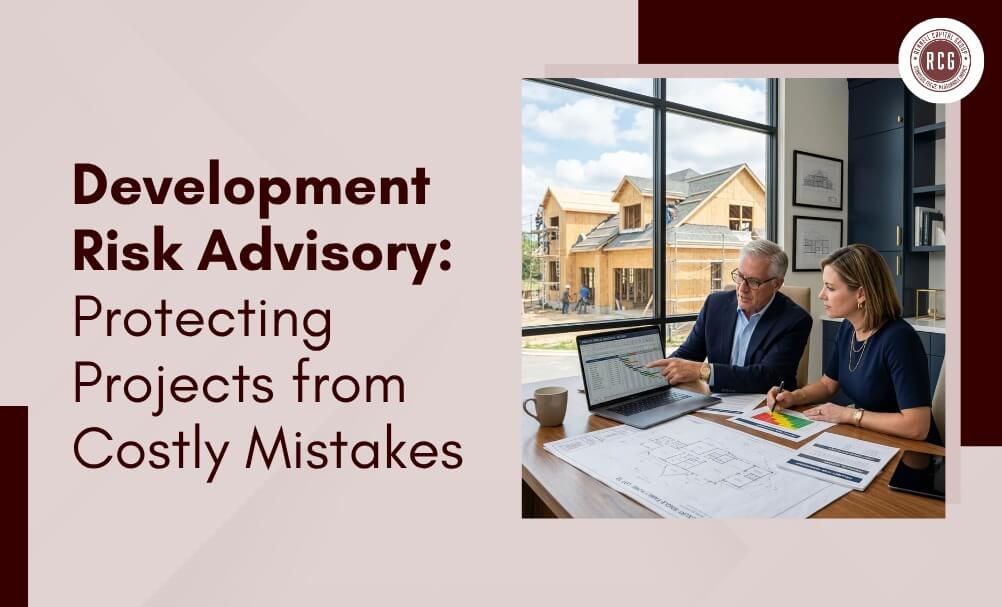
Every real estate project carries some risk. Land prices shift, interest rates climb, permits stall, and material costs creep higher than anyone planned for. These problems announce in advance.
That’s where development risk advisory becomes essential. A small oversight early in a project, an underestimated cost, a missed zoning issue, a thin contingency reserve can turn into a financial setback measured in hundreds of thousands of dollars. The bigger the project, the higher are the stakes.
Proactive planning changes the equation. Instead of scrambling to fix problems after they appear, developers who plan ahead can spot warning signs early and respond before damage is done. Development risk advisory gives project teams a structured way to identify, evaluate, and manage threats throughout the entire development lifecycle. This article breaks down what risk advisory involves, the most common risks developers face, and a practical process you can use to protect your next project.
What Is Development Risk Advisory?
Development risk advisory is a strategic service that helps developers identify, assess, and manage the risks tied to a real estate or construction project. In plain terms, it’s about finding problems before they cost you money.
The purpose is simple: replace guesswork with informed decision-making. Many developers only deal with risk when something goes wrong. By then, options are limited and costs are high. A risk advisory approach flips that pattern. Rather than reacting to a crisis, you identify potential issues early and build plans to handle them.
This difference reacting versus identifying early is the heart of good development risk assessment. Risk advisory covers four main categories:
- Financial risks – funding gaps, rising interest rates, and cost overruns that strain budgets.
- Construction risks – labor shortages, material price increases, and schedule delays.
- Regulatory risks – permitting delays, zoning challenges, and compliance requirements.
- Market risks – shifting demand and changing economic conditions that affect a project’s value.
When these risks are mapped out in advance, developers gain a clearer view of what could go wrong and what to do about it.
Why Risk Management Matters in Real Estate Development
Unmanaged risk doesn’t just create stress. It directly affects whether a project succeeds or fails. Strong project risk management protects the things developers care about most: money, time, and reputation.
Protecting Project Budgets
A project budget is only as strong as the assumptions it’s based on. No matter how carefully a budget is prepared, unexpected issues can quickly drive costs higher if potential risks haven’t been considered from the start.
Reducing Construction Delays
Construction delays can become expensive very quickly. When work stops, labor crews may be left waiting, financing costs continue to accumulate, and project completion dates get pushed further out. Even a short delay can have a ripple effect across the entire schedule.
Improving Decision-Making
Making important development decisions starts with having the right information. When developers have a clear understanding of the risks involved, they can evaluate their options more carefully and make decisions with greater confidence.
Supporting Long-Term Project Stability
A project isn’t finished when construction ends. Stability over the long term through lease-up, sale, or operation depends on planning that accounts for changing conditions. Real estate risk analysis helps developers build projects that hold their value and perform as intended well after the ribbon is cut.
The Most Common Risks in Development Projects
Understanding the specific risks developers face is the first step toward managing them. Most fall into four categories.
Financial Risk
Financial challenges are one of the major reasons development projects run into trouble. Even well-planned projects may face issues when costs rise unexpectedly or funding doesn’t align with actual project needs.
Some of the most common financial risks include:
- Funding gaps – This happens when the money originally secured for the project isn’t enough to cover the full cost of construction, operations, or unforeseen expenses.
- Rising interest rates – Higher borrowing costs can increase financing expenses, put pressure on cash flow, and reduce overall profitability.
- Cost overruns – Projects often end up costing more than expected due to inaccurate estimates, changes in project scope, unexpected site conditions, or increases in labor and material costs.
- Understanding these risks early gives developers an opportunity to plan ahead, adjust budgets, and put safeguards in place before financial issues begin affecting the project’s progress.
Construction Risk
The construction phase comes with its own challenges, many of which can affect both project timelines and budgets.
- Labor shortages – Finding enough skilled workers can be difficult, especially during busy construction periods. A shortage of qualified tradespeople can slow progress and increase labor costs.
- Material price increases – The cost of essential materials such as steel, lumber, concrete, and other building supplies can change unexpectedly. Sudden price increases can put pressure on budgets and affect overall project profitability.
- Schedule delays – Construction schedules can be disrupted by a range of factors, including bad weather, supply chain disruptions, permit issues, or coordination challenges between contractors and suppliers. Even minor delays may have a ripple effect across the entire project timeline.
- Recognizing these risks early allows project teams to plan ahead, build flexibility into schedules, and respond more effectively when unexpected issues arise.
Market Risk
External market forces can change a project’s outlook overnight:
- Declining demand – fewer buyers or tenants than projected, leading to slow absorption.
- Changing market conditions – economic shifts, oversupply, or local trends that reduce a property’s value.
Regulatory Risk
Government and compliance issues can stall even well-funded projects:
- Permitting delays – slow approvals that hold up construction starts.
- Zoning issues – restrictions that limit what can be built or how land can be used.
- Compliance requirements – codes, environmental rules, and regulations that add cost and complexity.
How Development Risk Advisory Helps Reduce Costly Mistakes
So how does risk advisory actually prevent expensive errors? It works through four connected activities.
Early risk identification comes first. By examining a project at the outset, advisors flag potential problems while there’s still time and flexibility to address them. Catching a zoning conflict during feasibility costs far less than discovering it after you’ve broken ground.
Project analysis digs into the numbers and assumptions behind a development. A thorough development feasibility analysis tests whether the project’s financial model holds up under different scenarios higher rates, longer timelines, softer demand.
Contingency planning prepares you for unexpected thing. Rather than hoping everything goes rightly, advisors help developers set aside reserves and build backup plans so a single setback doesn’t derail the whole project.
Strategic decision-making ties it all together. With risks identified and analyzed, developers can make smarter calls about financing, phasing, and timing. According to Project Management Institute (PMI), projects that build risk management into their process consistently outperform those that treat risk as an afterthought.
The result is fewer surprises, better outcomes, and a project that stays on track.
A Step-by-Step Development Risk Assessment Process
A reliable development risk assessment follows a clear sequence. Here’s a six-step framework you can apply to any project.
Step 1: Define Project Objectives
Start by clarifying what success looks like. What’s the target budget, timeline, and return? Clear objectives give you a benchmark to measure risks against.
Step 2: Identify Potential Risks
List every risk that could threaten your objectives: financial, construction, market, and regulatory. Involve your team, contractors, and advisors. The more thorough this list, the stronger your planning.
Step 3: Evaluate Impact and Probability
Not all risks are equal. Rate each one by how likely it is to occur and how much damage it could cause. A high-impact, high-probability risk demands attention; a minor, unlikely one can simply be monitored. This mirrors the prioritization step the Corporate Finance Institute (CFI) recommends in its risk management guidance.
Step 4: Create Mitigation Strategies
For each major risk, decide how you’ll respond. You might avoid it, reduce its likelihood, transfer it through insurance, or accept it with a contingency plan in place. Document these risk mitigation strategies so your team knows exactly what to do.
Step 5: Monitor Risks Throughout Development
Risk management isn’t a one-time exercise. Track your identified risks as the project moves forward, watching for early warning signs and new threats that emerge along the way.
Step 6: Adjust Plans as Conditions Change
Markets shift, costs change, and timelines evolve. Revisit your risk plan regularly and update it as conditions change. A plan that stays current keeps your project resilient from start to finish.
Common Mistakes Developers Make Without Risk Advisory
When developers skip a structured risk process, the same costly mistakes tend to repeat. Watch out for these:
- Unrealistic budgets – optimistic numbers that ignore likely cost increases and leave no room for error.
- Insufficient contingency reserves – too little set aside, so any surprise becomes a funding crisis.
- Weak project oversight – gaps in monitoring that let small problems grow before anyone notices.
- Ignoring market changes – pressing ahead with plans that no longer match current demand or conditions.
- Inadequate due diligence – rushing through site, zoning, and financial checks that later reveal expensive surprises.
Each of these mistakes is preventable. A disciplined risk advisory approach catches them before they cost you.
The Connection Between Risk Advisory and Financial Planning
Development risk advisory and financial planning go hand in hand. Strong risk management protects not just the project, but the capital behind it.
Capital preservation sits at the core. Capital risk management focuses on protecting the money invested in a project, making sure it isn’t lost to avoidable mistakes. Every risk you identify and address is a step toward keeping your capital safe.
Budget accuracy improves when risk is factored in. A budget that accounts for likely cost increases and contingencies is far more dependable than one built on best-case assumptions.
Cash flow management benefits too. Understanding when funding gaps or interest rate changes might hit lets you plan financing to keep cash flowing smoothly through every project phase.
Investment discipline rounds it out. Sound financial risk planning keeps emotions out of major decisions, helping developers and investors stick to strategies that protect long-term returns rather than chasing short-term gains.
When risk advisory and financial planning work together, projects stand on a much firmer foundation.
How Risk Advisory Supports Better Project Outcomes
The payoff of strong risk advisory shows up across the entire project. Developers gain improved confidence because they understand what they’re facing and have plans ready for it. Uncertainty stops being paralyzing and becomes manageable.
Planning grows stronger as well. With risks mapped out, every part of the project budget, schedule, financing rests on more realistic assumptions. That leads to reduced uncertainty, since fewer unknowns mean fewer nasty surprises.
Best of all, execution may become more predictable. Projects guided by solid risk management tend to finish closer to budget and on schedule, because the team anticipated challenges instead of reacting to them. Predictability is exactly what investors, lenders, and partners want to see.
Why Professional Advisory Matters for Complex Projects
Large and complex developments carry too much risk to manage on instinct alone. Professional advisory brings an outside perspective that internal teams often can’t provide.
Independent evaluation is one key benefit. An advisor with no stake in pushing a project forward can assess risks honestly, free of the optimism bias that often clouds in-house judgment. That objective risk assessment surfaces problems others might overlook or downplay.
Professional advisors also bring strategic planning experience drawn from many projects, plus the capacity for long-term project oversight that keeps risk management active from feasibility through delivery.
Working with an experienced capital advisory team can help developers identify risks earlier and create more effective strategies for managing uncertainty throughout the project lifecycle. The right partner combines financial and technical know-how, giving complex projects the disciplined development planning support they need to succeed.
Frequently Asked Questions
What is development risk advisory in real estate?
Development risk advisory is a service that helps developers identify, assess, and manage the financial, construction, market, and regulatory risks tied to a project. The goal is to catch potential problems early and build plans to address them before they affect budgets, schedules, or returns.
When should a developer bring in risk advisory support?
The earlier the better. Engaging risk advisory during the feasibility and planning stages gives you the most flexibility to address issues at low cost. Catching a problem before construction starts is far cheaper than fixing it mid-build.
What are the biggest risks in development projects?
The most common risks are financial (funding gaps, rising interest rates, cost overruns), construction (labor shortages, material price increases, delays), market (declining demand, changing conditions), and regulatory (permitting delays, zoning issues, compliance). Financial risks tend to cause the most project failures.
How does risk advisory protect my budget?
Risk advisory builds realistic budgets that include proper contingency reserves and account for likely cost increases. By identifying construction budget risk and other threats early, it helps prevent the overruns that erode profit margins.
Is professional risk advisory worth the cost for smaller projects?
Even smaller projects benefit from a structured risk process. While the level of support can scale to project size, the core practices identifying risks, evaluating impact, and planning for contingencies protect capital on developments of any scale.
Turning Uncertainty Into a Competitive Advantage
Every development project comes with a certain level of uncertainty. Unexpected challenges may arise at any stage, but with right planning, they don’t have to turn into costly setbacks.
A structured approach to risk management helps developers gain a clearer understanding of the financial, construction, market, and regulatory factors that could influence a project’s success. Looking at these risks early in a process allows teams to make better-informed decisions, strengthen project planning, and improve overall project resilience.
At Rennell Capital Group, our Capital Advisory team works closely with developers, investors, and property owners to evaluate opportunities and identify potential risks before they become problems.
When risks are managed proactively, projects are in a much stronger position to stay on track and achieve their goals. If you’re planning a new development, taking the time to build a thoughtful risk management strategy from the outset may make a significant difference in the long-term success of your project.

Looking for fresh content?
Get articles and insights from our weekly newsletter.
Recent Posts
Discuss a Project today!