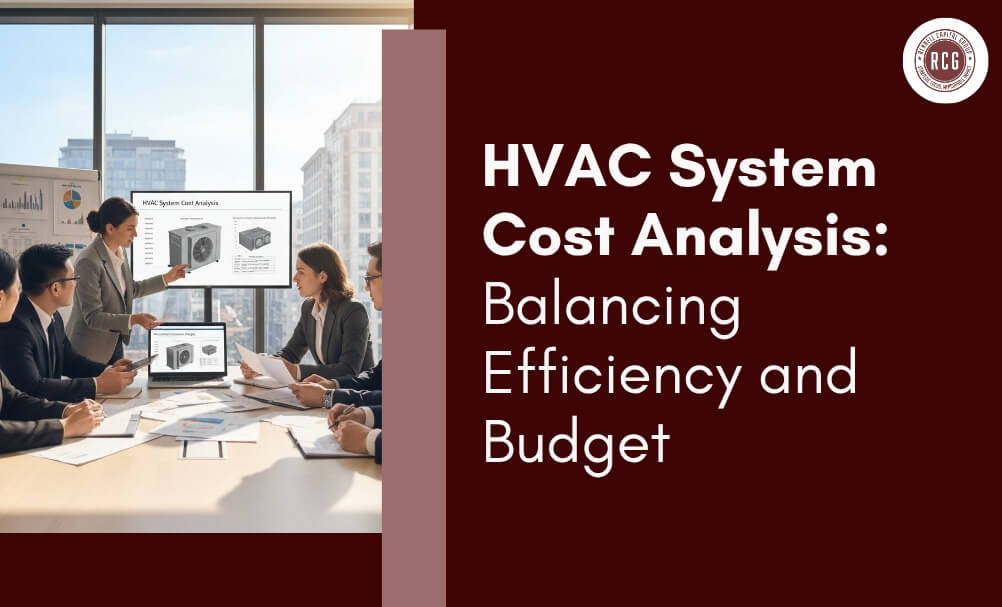
Heating, ventilation, and air conditioning equipment represents one of the largest cost drivers in commercial buildings. Facility owners and real estate developers constantly face a difficult financial challenge: deciding between low upfront purchasing expenses and long-term energy efficiency. Paying less on day one often leads to massive utility bills down the road. Buying the most advanced, highly efficient equipment requires a massive initial budget.
This is where an HVAC system cost analysis becomes incredibly valuable. By looking at the complete financial picture, project teams can map out exact expenses over the entire lifespan of the equipment. Lifecycle thinking and careful cost planning prevent costly surprises. This financial forecasting helps you understand exactly what you are paying for, how much energy the building will consume, and when major parts will eventually need replacement. Through thorough HVAC system cost analysis, developers can finally align their immediate construction budgets with their long-term operational goals.
What Is HVAC System Cost Analysis?
HVAC system cost analysis evaluates the total cost of installing, operating, and maintaining heating, ventilation, and air conditioning systems. It helps project teams balance upfront investment with long-term energy efficiency and performance.
In fast-moving construction and real estate projects, making quick guesses about equipment costs can easily hurt profitability. A proper HVAC cost analysis takes that uncertainty out of the equation. It looks at every cost involved from the day the ductwork is installed to the time major equipment like chillers may need replacement years down the line.
During preconstruction planning, this type of deep financial review is critical. It allows architects, engineers, and financial stakeholders to compare different design options side by side. Instead of just looking at the sticker price of a rooftop unit, an HVAC system cost analysis provides a holistic view of the total cost of ownership HVAC. This ensures the final chosen system actually fits the financial realities of the building owner.
Why HVAC Cost Analysis Matters in Commercial Projects
Commercial projects operate on strict financial margins. The mechanical systems directly impact the total project budget, taking up a massive portion of the available funds. If the HVAC installation cost breakdown is inaccurate, the entire construction project can run out of money before completion.
What’s often overlooked is how much these systems affect costs after construction is done. In commercial buildings, energy use is high, and heating and cooling usually take up the biggest share of that. Without taking a close look at HVAC costs upfront, owners can end up with systems that use more power than expected leading to higher bills and steady losses over time.
These systems play a big role in how people experience a building day to day. If the temperature isn’t right or the air feels stuffy, tenants won’t stick around for long, and it can also affect how well people work. For developers, owners, and investors, understanding HVAC costs upfront helps keep the space comfortable without letting energy bills get out of hand. In the end, it helps maintain the property’s value and keeps it attractive to the people using it.
Key Components of HVAC System Cost Analysis
A proper financial evaluation looks at four main categories. Understanding these buckets helps estimators build an accurate HVAC budget planning document.
Initial Installation Costs
The most obvious expense is the day-one price tag. This includes the physical equipment, such as chillers, boilers, cooling towers, and air handling units. It also covers the extensive ductwork required to move air throughout the facility. Labor is another massive factor, as commercial installations require highly skilled technicians working over several months. Finally, modern buildings require complex controls and thermostats to manage the climate effectively.
Operating Costs
Once the building is up and running, attention shifts to how much it costs to operate every day. A big part of that comes down to energy use. Large compressors and fans can consume a lot of electricity, and those costs add up fast. How efficiently the system runs makes a real difference whether energy is being used effectively or simply wasted. A thorough HVAC cost review takes this into account and estimates future utility bills based on local energy rates.
Maintenance & Repair Costs
Mechanical equipment requires constant attention to run smoothly. Regular servicing, such as changing industrial filters and inspecting belts, costs money. Over time, parts will break. Part replacement and emergency repairs must be factored into the financial model. Additionally, system downtime can cost a business thousands of dollars in lost productivity, making reliable maintenance schedules a strict financial necessity.
Lifecycle Costs
Commercial HVAC systems do not last forever. An accurate HVAC lifecycle cost analysis looks at the total cost over 15 to 25 years. This includes planning for the eventual replacement of major components. By understanding the full lifespan of the equipment, owners can set aside capital reserves for future upgrades instead of being caught off guard by a sudden failure.
Factors That Influence HVAC System Costs
Every commercial building is unique, meaning a standard pricing template rarely works. Several specific factors directly change the numbers inside an HVAC system cost analysis.
Building size and layout play a massive role. A massive open warehouse requires a completely different approach than a 30-story office tower with hundreds of individual rooms. The specific system type also swings the budget dramatically. Variable Refrigerant Flow (VRF) systems, large central chillers, and packaged rooftop units all carry vastly different price tags and installation requirements.
Where a building is located has a big impact on how hard the HVAC system needs to work. In hot, humid regions, cooling demands are much higher, while colder areas need stronger heating during winter. Efficiency also plays a role in cost, more efficient units usually cost more at the start but help save on energy over time.
The way the building is used matters just as much. For example, a hospital needs constant fresh air and strict ventilation standards, which makes the system more complex and expensive. In comparison, a typical retail space has much simpler cooling needs.
Energy Efficiency vs Initial Cost: Finding the Balance
The biggest debate in any commercial construction project is whether to pay more now or pay more later. Energy efficient HVAC systems often come with a painful sticker shock. The higher upfront cost can strain the immediate construction loan. However, these premium systems offer massive long-term savings.
A thorough HVAC system cost analysis helps calculate the exact Return on Investment (ROI) of energy-efficient systems. By mapping out the projected utility savings over time, owners can see exactly how many years it will take for the premium equipment to pay for itself. If a highly efficient chiller costs an extra $50,000 but saves $15,000 a year in electricity, the ROI happens in just over three years.
HVAC Cost Analysis Methods
Professionals use several different techniques to forecast these expenses. The right method depends on what stage the construction project is currently in.
Cost per Square Foot
During the very early stages of a project, engineers use historical data to estimate the commercial HVAC cost based on the total size of the building. This provides a quick, rough budget number before any actual design work begins.
Lifecycle Cost Analysis
This method looks at the long-term view. It adds the initial purchase price, maintenance, and expected energy bills over 20 years to find the true total cost of ownership. This helps owners decide between two different brands or system types.
Energy Modeling
Using advanced software, engineers create a virtual simulation of the building. The computer tracks how the sun hits the windows and how the building retains heat. This provides a highly accurate prediction of future utility bills, which feeds directly into the HVAC system cost analysis.
Detailed Cost Estimating
Once the final blueprints are drawn, estimators count every single piece of pipe, duct, and equipment. They apply current market pricing for labor and materials to create a highly accurate, guaranteed installation budget.
Common Mistakes in HVAC Cost Analysis
A common mistake is focusing only on the upfront price. Choosing the cheapest option may seem like a smart move at first, but it leads to higher running costs and more frequent repairs over time.
Ignoring maintenance is another major pitfall. If a system is placed in an area that is impossible to reach, mechanics will charge a premium just to access it for routine filter changes. Underestimating energy use also destroys financial models. If the analysis assumes the building operates 8 hours a day, but the tenants actually work 12 hours a day, the utility budget will fall short. Finally, poor system selection like putting a basic retail rooftop unit on a high-tech laboratory creates severe operational and financial risks. An accurate HVAC system cost analysis prevents these costly missteps.
Role of MEP Planning in HVAC Cost Optimization
Mechanical, Electrical, and Plumbing (MEP) engineers must work together seamlessly to keep budgets under control. Effective MEP cost planning relies on early coordination between all the different trades. If the HVAC ducts clash with the plumbing pipes or electrical trays, the contractors have to stop work and redesign the layout on the fly, which costs time and money.
When certain systems are thought through properly from the beginning, everything fits together more smoothly, including how the HVAC ties into the building’s electrical setup. Taking care of this early on helps avoid expensive changes and rework later during construction. It even makes the system run better, with ductwork laid out in a straightforward way instead of weaving through unnecessary routes.
Technology and Tools for HVAC Cost Analysis
Estimating today has moved far beyond basic spreadsheets. With better tools available, HVAC cost planning has become quicker and much more precise. Engineers can now test different equipment options in a virtual setup, comparing how each one performs before anything is actually purchased.
Cost estimates are also more up to date, as many tools pull in current material prices. If something like ductwork materials becomes more expensive, the overall budget reflects that change right away. On top of that, modern building systems track how much energy is actually being used in real buildings. This kind of real data makes it easier to plan and estimate costs more accurately for future projects.
How HVAC Cost Analysis Supports Better Investment Decisions
At the end of the day, commercial real estate comes down to making sound financial decisions. Taking a close look at HVAC costs helps improve returns by making sure money is spent where it actually matters. It also keeps long-term expenses in check, which means better cash flow for the owner over time.
This approach also makes it easier to meet sustainability goals. When the cost savings of efficient systems are clear, putting money into them feels like a practical decision rather than a risk.
Frequently Asked Questions
What is HVAC system cost analysis?
HVAC system cost analysis evaluates the total cost of installing, operating, and maintaining heating, ventilation, and air conditioning systems. It helps project teams balance upfront investment with long-term energy efficiency and performance across the full lifecycle of the equipment.
What are the key components of an HVAC cost analysis?
A proper HVAC cost analysis covers four main categories: initial installation costs including equipment, ductwork, and labor; ongoing operating costs including energy consumption; maintenance and repair costs; and lifecycle costs covering equipment replacement over 15 to 25 years.
How much do HVAC systems cost in commercial buildings?
Commercial HVAC costs vary significantly based on building type, system complexity, and location. Standard office buildings typically range from $40 to $80 per square foot for MEP systems, while specialty buildings like hospitals and laboratories can reach $150 to $250 per square foot or more.
What is HVAC lifecycle cost analysis?
HVAC lifecycle cost analysis evaluates the total financial cost of an HVAC system over its full lifespan — typically 15 to 25 years. It includes the initial purchase price, energy costs, maintenance and repairs, and eventual equipment replacement to determine the true total cost of ownership.
Why does HVAC cost analysis matter for commercial real estate projects?
HVAC systems represent one of the largest cost drivers in commercial construction. Without accurate upfront cost analysis, owners face unexpected utility bills, costly repairs, and budget overruns. A thorough HVAC system cost analysis helps developers, owners, and contractors make smarter decisions that balance performance with long-term financial sustainability.
The Bottom Line
Looking closely at HVAC costs is key to keeping performance, efficiency, and budget in balance on modern construction projects. When both the upfront installation cost and the long-term running expenses are considered, teams are in a much better position to make practical decisions that improve how the building performs while keeping finances under control.
Getting HVAC costs right isn’t easy. It takes experience, an understanding of how the system works, and up-to-date pricing.
We specialize in MEP cost planning, HVAC estimating, and preconstruction consulting to help developers, contractors, and owners achieve the right balance between efficiency and budget.
Contact Rennell Capital Group today to optimize your HVAC systems and ensure smarter, more cost-effective project outcomes.

Looking for fresh content?
Get articles and insights from our weekly newsletter.
Recent Posts
Discuss a Project today!