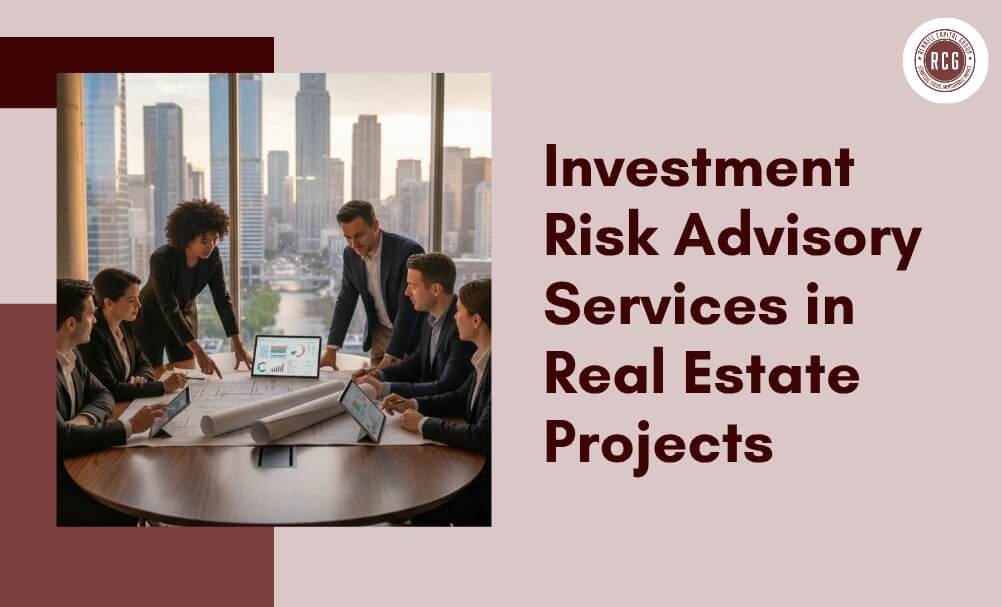
Real estate projects come with many layers of risk. From the early stage of selecting a site to the final phase of construction, developers and investors have to deal with financial, operational, and market-related uncertainties. Some of these risks aren’t obvious at first. Even small changes like a rise in interest rates, delays in approvals, or sudden increases in material costs can affect the outcome of a project.
To handle these challenges, many professionals turn to investment risk advisory. This approach helps identify possible issues early and find ways to manage them before they become bigger problems. Instead of relying on assumptions or basic calculations, teams use expert insight to make more informed decisions about their investments.
This guide looks at how a structured approach to risk analysis can help protect budgets, keep projects on schedule, and support long-term success.
What Are Investment Risk Advisory Services?
In real estate, investment risk advisory is all about taking a close look at the risks that could affect a development or property acquisition. Experts review the project from different angles, including the financial model, construction plans, and market assumptions, to spot any weak areas that could create problems later.
This is varied from general consulting, which usually focuses on bigger-picture strategy or improving operations. Risk advisory is more focused on understanding what could go wrong. It’s not only about looking at the potential upside, but also testing whether the assumptions behind the project can hold up if things change.
Bringing these advisors in early can make a big difference. Before any land is bought or contracts are signed, they help spot potential warning signs that could easily be overlooked. This offers developers time to rethinking plan, renegotiate terms, or step away from the deal before too much money is tied up.
Why Investment Risk Advisory Management Is Critical in Real Estate
Real estate development requires massive amounts of upfront capital, long timelines, and the coordination of dozens of independent teams. Unmanaged risk can severely affect multiple areas of a project.
Capital preservation
The main goal of any investment is to protect the capital put in at the start. When unexpected costs come up, they directly reduce the project’s equity. A proper capital risk review helps make sure there are enough contingencies in place from the beginning. This lowers the chances of the project running out of funds midway through construction, which is often one of the worst situations for investors.
Project timelines
Time has a direct effect on project costs. Every month of delay adds carrying costs, interest payments, and lost revenue opportunities. Strong risk management helps know possible delays early, whether they are caused by permit approvals, material shortages, or other issues.
Investor confidence
Investors need to know their money is safe. If a development team frequently runs into unexpected problems, investors will quickly lose faith. By utilizing investment risk advisory services, developers show their financial partners that they take capital protection seriously. Transparent risk reporting builds trust and makes it easier to secure development funding strategy support for future projects.
Overall project viability
Some risks are severe enough to threaten the entire existence of a project. If market demand collapses or a municipality denies a crucial zoning change, the project might no longer make financial sense. Regular risk evaluations ensure the underlying fundamentals of the project remain strong from start to finish.
Key Risk Categories in Real Estate Projects
The first step in managing project risk is understanding the different types of challenges a development may face. In real estate, these risks are usually looked at across five key areas.
Financial risk
This relates to money needed to develop and operate the property. It covers how the project is financed, the amount of debt being used, and how changes in interest rates could affect costs. It even includes risks such as budget overruns and rising material prices, both of which can put added pressure on the project’s returns.
Market risk
Market risk comes from outside factors that influence demand and pricing. For example, an economic slowdown, more competition in the area, or lower rental demand can directly affect occupancy levels and income. Keeping a close eye on market trends helps in understanding whether the project is likely to perform as planned.
Construction risk
Construction comes with a level of uncertainty. Delays caused by weather, labor shortages, or supply chain issues can easily push timelines back and drive costs up. The reliability of contractors and vendors even plays a big part in keeping the project on schedule and avoiding unnecessary setbacks.
Regulatory and approval risk
Before construction even starts, developers need to work through zoning approvals, permits, and local compliance requirements. Any delays in approvals or changes requested by authorities may have an impact on both the timeline and the budget.
Operational risk
Once the project is underway, day-to-day coordination becomes crucial. Poor communication between consultants, contractors, and site teams can quickly lead to mistakes, delays, and rework. Having clear processes in place and keeping everyone coordinated helps reduce all these problems and keeps the project moving smoothly.
How Investment Risk Advisory Services Add Value
Advisory teams do not just point out problems; they provide actionable solutions. They offer an independent risk analysis that removes the natural bias developers have toward their own projects.
One of their most valuable tools is scenario planning. Advisors look at what happens if rents drop by 10%, or if construction takes six months longer than planned. Through detailed sensitivity analysis, they show exactly how these changes impact the investor’s internal rate of return (IRR).
Once all these risks are identified, the advisory team works on practical ways to reduce them. This may include securing fixed interest rates, arranging specialized insurance, or revising contractor agreements so responsibilities are more clearly defined.
Common Mistakes Without Investment Risk Advisory
Without professional oversight, developers often fall into predictable traps.
Overconfidence in projections is a major issue. Development teams naturally want to believe their project will be a massive success, leading them to use overly optimistic rent growth or sales pace assumptions.
Incomplete due diligence is another frequent mistake. Rushing to close a deal, a buyer might skip a thorough environmental review or fail to check a contractor’s financial stability.
Many teams make the mistake of overlooking what could go wrong. Their financial models are often built around everything going exactly as planned, with little to no room for setbacks. As a result, there’s no real contingency plan in place. So when something unexpected happens like a pipe bursting or a permit getting denied, the team is left rushing to arrange additional funds because those possibilities were never factored in.
A Practical Risk Assessment Framework
Professional advisors use a structured framework to evaluate every deal. This property investment risk strategy ensures nothing falls through the cracks.
- Identify all potential risks: The team sits down and brainstorms every possible threat, from a sudden spike in lumber prices to a change in local tax laws.
- Evaluate likelihood and impact: Not all risks are equal. The team assigns a probability to each threat and calculates the exact financial damage it would cause.
- Analyze financial exposure: Using financial risk evaluation techniques, the team figures out how much capital is truly at risk if multiple things go wrong simultaneously.
- Develop mitigation strategies: For every major risk, the team creates a defense mechanism. This could mean adjusting the design, changing the financing structure, or securing different municipal approvals.
- Monitor risks throughout the project: The framework does not sit on a shelf. The team reviews the risk matrix monthly to see if new threats have emerged.
- Adjust strategy as conditions change: If inflation suddenly spikes, the team quickly updates their procurement strategy to buy materials in bulk before prices rise further.
How Investment Risk Advisory Supports Better Investment Decisions
Bringing a risk advisor into the process can make a big difference in how a company plans and works. It gives decision-makers a much clearer view of the possible risks, rather than leaving them to rely on assumptions or guesswork.
With that clarity, capital can be allocated more effectively. Rather than holding a large general reserve, developers can set aside funds for specific risks, which helps free up capital for other parts of the project or future investments.
In the end, this helps reduce uncertainty. While no one may foresee every possible outcome, having a clear view of the risks makes it much easier to plan with confidence.
The Role of Advisory in Complex Projects
As projects become larger, keeping track of every moving part becomes much more difficult. A large mixed-use development, for example, may include residential, retail, and office spaces, each bringing its own market demands and construction challenges.
In certain situations, advisory teams may help bring everything together. They act as a central point of coordination, making sure lenders understand the construction side of the project and contractors stay aware of the financial limits.
Their support continues through every stage, from early feasibility study to the final lease-up phase. By keeping planning and day-to-day execution aligned, they may help project stay focused on its original financial goals.
Strategic Oversight for Real Estate Investments
Real estate development always comes with a certain level of risk, but problems begin when those risks are not properly managed. Taking a clear and structured approach to identifying, assessing, and addressing potential issues helps developers and investors move ahead with more confidence and better control over project.
Investment risk advisory services bring discipline to this process transforming uncertainty into informed decision-making through analysis, planning, and ongoing oversight.
Our Capital Advisory team approaches risk with a comprehensive perspective, integrating financial modeling, development strategy, and project oversight insights. By evaluating opportunities through a structured risk lens, we help clients better understand potential exposures and align their decisions with long-term objectives.
When risk is understood and managed proactively, projects are better positioned for stability and successful execution.

Looking for fresh content?
Get articles and insights from our weekly newsletter.
Recent Posts
Discuss a Project today!