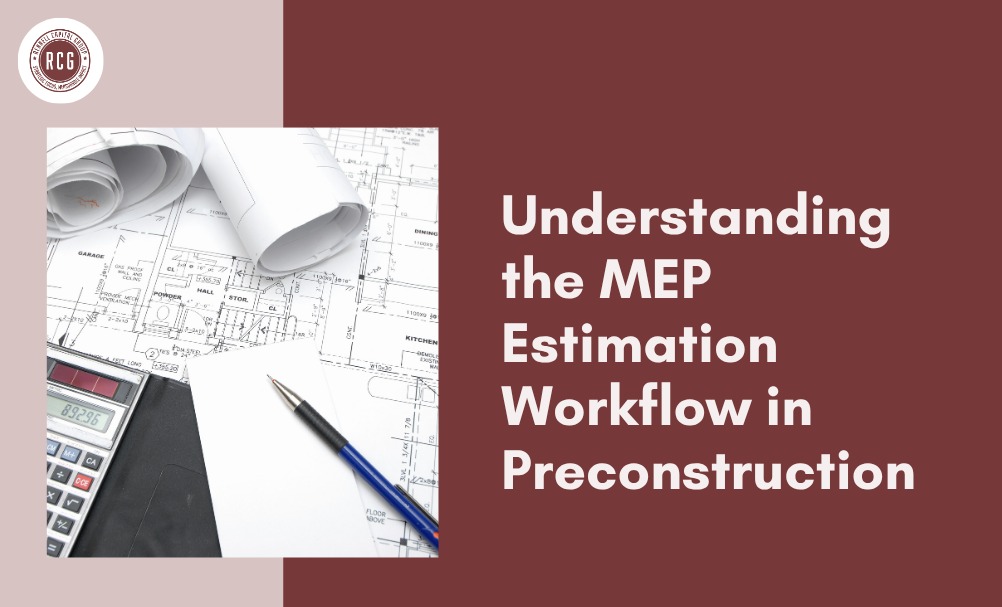
“The MEP estimation workflow is a step-by-step process used during preconstruction to calculate the cost, labor, materials, and scope of mechanical, electrical, and plumbing systems in a construction project.”
Accurate estimates are one of the most important parts of a successful construction project. When the numbers are prepared correctly from the beginning, the entire building process becomes much smoother. MEP estimating plays a key role during preconstruction because it helps project managers manage costs, maintain timelines, and keep all teams working in sync.
MEP systems make up a significant part of overall project costs, so even a small error in estimating can lead to serious budget issues later on. When teams follow a clear and structured estimating process, they’re able to identify problems early and reduce the chances of costly surprises during construction. Good preconstruction planning also helps ensure the right materials are ordered, the right workforce is in place, and unnecessary delays are avoided.
What Is MEP Estimation in Construction?
MEP estimation is the process of calculating the costs associated with a building’s mechanical, electrical, and plumbing systems. This mechanical electrical plumbing estimating includes everything from HVAC units and piping to complex wiring and lighting fixtures.
These systems are highly complex. They require specialized knowledge to measure and price accurately. In commercial projects, MEP systems often overlap and share tight spaces within walls and ceilings.
For example, when updating a commercial office building, accurate electrical estimates are needed to handle changes like upgraded server rooms and new lighting systems. If a clash between an HVAC duct and a plumbing line is not identified early, it can lead to costly rework once construction is already underway.
Why the MEP Estimation Workflow Matters in Preconstruction
A reliable MEP estimation workflow keeps your project grounded in reality. It is the foundation for effective budget planning and ensures your bid accuracy is spot on.
Proper estimating allows contractors to forecast material needs and plan labor requirements long before breaking ground. It also improves coordination with architects and engineers. When preconstruction estimating services are handled correctly, you drastically reduce the risk of surprise costs.
A clear MEP estimating process prevents budget overruns. It gives owners and developers the financial clarity they need to approve projects and secure funding.
Key Stages of the MEP Estimation Workflow
This step-by-step process ensures nothing gets missed when calculating MEP costs.
1. Reviewing Construction Drawings and Specifications
The process starts with reviewing the blueprints. Estimators carefully study the construction drawings to know full scope of work and spot any missing or unclear details. When things don’t make any sense or isn’t fully shown, they submit Requests for Information (RFIs) to design team to get clarification before moving ahead with pricing.
2. Quantity Takeoff Process
Next is the quantity takeoff stage. Estimators review drawings and carefully count equipment, measure pipe lengths, and calculate wiring runs. Digital tools are often used to speed things up and improve more accuracy. HVAC systems and plumbing fixtures are also reviewed to make sure all materials are properly accounted for.
3. Labor Cost Estimation
Materials are only part of the job. Estimators also need to calculate the labor needed to install the systems. This includes looking at how productive crews are and estimating the total number of work hours required. It also requires a good understanding of local labor rates, which can vary widely by region. In addition, differences between union and non-union labor costs must be considered to keep the budget accurate and realistic.
4. Material Pricing and Vendor Quotes
With quantities and labor sorted, it is time to assign dollar values. Estimators coordinate with suppliers to get current material pricing. They must account for market price fluctuations, as copper and steel prices change rapidly. They even check equipment lead times to ensure large items like chillers arrive on schedule.
5. Value Engineering and Cost Optimization
A strong MEP estimation workflow includes value engineering in MEP. Estimators look for alternative materials or methods that save money without hurting quality. They suggest efficiency improvements and provide cost-saving recommendations to the client. This adds tremendous value during preconstruction.
6. Final Estimate Review and Bid Submission
The last step is a thorough internal quality assurance check. Senior estimators review the numbers to catch any mistakes. Once verified, the team prepares the final proposal and completes the bid submission process.
How Technology Improves the MEP Estimation Workflow
Modern software has completely transformed how estimators work. Building Information Modeling (BIM) integration allows teams to visualize MEP systems in 3D. A strong BIM estimating workflow may help identify clashes before they become costly site problems.
Tools like Bluebeam, Trimble, AutoCAD, and Revit are now industry standards. AI-based estimating tools can read drawings and automate parts of the takeoff process. Cloud collaboration ensures that everyone on the preconstruction team has access to the most updated cost data.
How Accurate MEP Estimation Impacts Project Success
When the MEP estimation workflow is executed perfectly, the entire project benefits. It leads to heavily reduced cost overruns and much better project scheduling.
Accurate estimates improve cash flow management for contractors and owners. They result in fewer change orders during the build, keeping teams focused on construction rather than paperwork. Ultimately, a precise MEP budget planning phase builds deep client confidence.
Why Contractors Outsource MEP Estimating Services
Many firms choose to partner with outside experts to handle their estimating. Outsourcing MEP Estimating Services provides massive time savings. It offers scalability, allowing contractors to bid on more projects without hiring full-time staff.
Outsourcing also guarantees a faster turnaround time. Contractors gain immediate access to highly experienced estimators, giving them strong competitive bidding advantages in a crowded market.
Moving Forward with Precision in Construction
A detailed MEP estimation workflow is important for any commercial construction project. It helps keep budgets under control, improves coordination between teams, and supports more accurate planning before construction begins. Spending time to get the numbers right early on leads to better decisions and fewer problems later in the project.
For professional support, Rennell Capital Group offers preconstruction consulting to help guide projects in the right direction. Their team also provides construction management services that focus on keeping budgets under control and maintaining project timelines.
Frequently Asked Questions
What is MEP estimation?
MEP estimation is the process of calculating costs for mechanical, electrical, and plumbing systems. It involves pricing materials and labor. Using commercial construction estimating helps builders create accurate budgets. A strong MEP estimating process keeps projects profitable.
Why is MEP estimating important in preconstruction?
Accurate estimating prevents budget overruns and delays. It guides the preconstruction planning process by forecasting material and labor needs. Good MEP cost control ensures project owners secure the right funding. It also helps teams coordinate effectively.
What software is used for MEP estimating?
Estimators use tools like Bluebeam, Trimble, and Revit. These programs support the BIM estimating workflow by visualizing 3D models. Digital tools improve the quantity takeoff workflow. They make mechanical electrical plumbing estimating much faster and more accurate.
How accurate should MEP estimates be?
Estimates must be highly accurate to prevent financial losses. A detailed estimating workflow in construction leaves no room for guessing. Using updated pricing and strict construction cost estimation workflow rules helps ensure every bid is realistic and competitive.
What is quantity takeoff in MEP estimation?
Quantity takeoff involves counting materials needed for a project. Estimators measure pipes, wires, and HVAC units. Utilizing specialized MEP takeoff services ensures exact numbers. An accurate quantity takeoff workflow is the foundation of reliable plumbing cost estimation.

Looking for fresh content?
Get articles and insights from our weekly newsletter.
Recent Posts
Discuss a Project today!