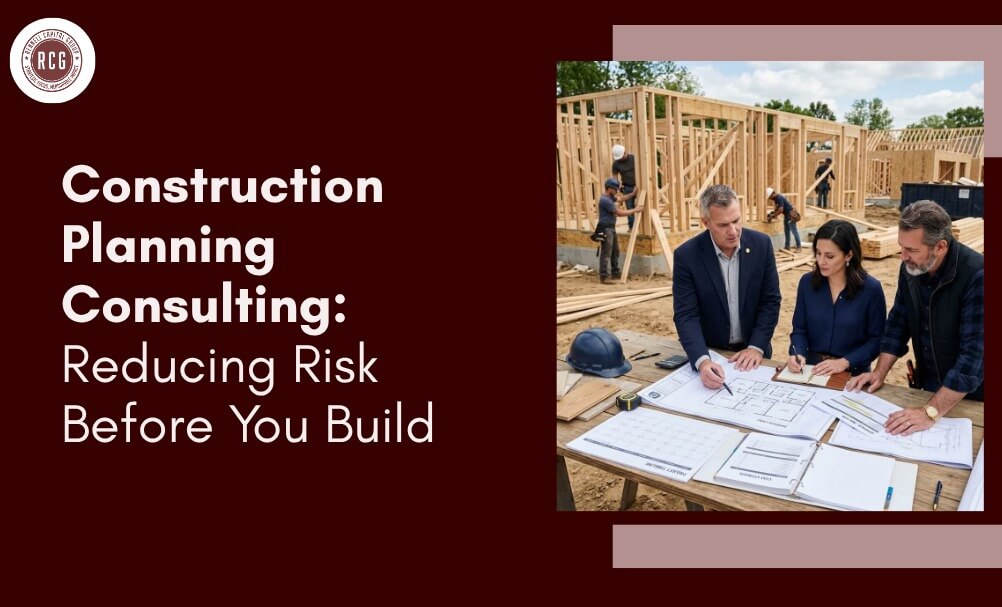
A strong construction project begins with strong planning. There are many decisions to be made before the first dirt is even moved. These decisions often have ramifications for the budget, the schedule, the materials, and the quality of the final product. Construction planning consulting allows the owner and the developer the opportunity to consider these issues prior to the start of construction.
If there is no construction planning completed, small problems will lead to big issues. A weak budget will lead to unexpected costs. A poor schedule will create delays. Lack of planning details will lead to issues for contractors, designers, and owners. This leaves the team in a position of having to resolve issues that will also lead to additional costs.
Planning provides a clear, direct route for the team. The construction plans help the team understand the work to be done, provide a target for a budget, address the components of the schedule, and help the team develop a plan for potential issues. This document will help the construction planning consulting process and help plans be developed to support the project from concept to reality with a minimum of surprises.
What Is Construction Planning Consulting?
Construction Planning Consultants assist property owners and developers with preparing for each stage of the construction process. They will build a plan with your team that defines the project goals and objectives with consideration for budgets and timeframes. Construction planning consulting differs from construction management. Construction management is the physical process of building. Construction management is carried out after the pre-construction stage is completed, and the major decisions regarding the project have been made.
Consultants in the pre-construction stage focus on:
- Scope – Planning the expected objectives and outcomes of the project
- Costs – Estimating potential costs and allowing for the unknown
- Time – Scheduling realistic needs
- Stakeholder alignment – Coordinating partners and service teams
The pre-construction stage seeks to minimize the unknowns and provides the strongest foundation on which a project can be built.
Why Construction Planning Matters Before Building
Good planning affects every stage of a construction project. Here’s how:
Creates More Accurate Budgets
A well-developed budget is one of the most valuable outputs of pre-construction planning. Rather than using rough estimates, planning consultants analyze site conditions, material costs, labor requirements, and potential contingencies. The result is a far more accurate financial picture one that reduces the risk of surprise costs during the build.
Reduces Project Delays
Most construction delays are rooted in decisions or indecisions made in the planning phase. When scope is unclear, schedules are vague, or teams aren’t aligned, delays compound quickly. Strong construction planning services create clarity early, so teams can move forward without constant interruptions.
Improves Team Coordination
Construction projects involve many moving parts: architects, engineers, contractors, suppliers, and financiers. A clear planning process keeps all parties informed and aligned, reducing confusion and miscommunication that can stall progress.
Supports Better Financial Decisions
Planning gives developers the information they need to make smarter financial decisions. Should you proceed with the project as scoped? Are there opportunities to reduce costs without sacrificing quality? Is the timeline realistic given current market conditions? Good planning answers these questions before they become costly surprises.
Key Parts of a Construction Planning Process
A thorough construction planning process typically covers six core areas:
Project Scope Planning
Scope planning defines what the project will include and just as importantly, what it won’t. A clearly defined scope prevents “scope creep,” which happens when additional work is added without adjusting the budget or schedule accordingly.
Budget Development
Construction budgeting involves estimating all project costs: design, materials, labor, permits, contingencies, and financing. Experienced planning consultants build in realistic buffers so that your budget reflects real-world conditions, not just best-case assumptions.
Scheduling and Timeline Planning
A project scheduling strategy maps out each phase of construction in a logical sequence. It identifies critical milestones, accounts for lead times on materials, and flags potential conflicts before they arise. A realistic schedule is a critical tool for holding teams accountable throughout the project.
Resource Planning
Resource planning ensures that the right people, equipment, and materials are available at the right times. Poor resource planning is a leading cause of delays and cost overruns, so addressing this early can have a significant impact on project delivery.
Risk Assessment
Construction risk management involves identifying potential threats to the project budget, risks, site conditions, supply chain issues, regulatory changes, and developing strategies to address them. According to the Project Management Institute (PMI) consistently highlights early risk identification as one of the most effective ways to improve project outcomes.
Permit and Compliance Planning
Navigating permits, zoning approvals, and building codes can be time-consuming. Factoring this into the planning process early means these requirements don’t catch your team off guard mid-project.
Common Risks That Good Planning Can Prevent
Most construction problems are predictable. Here are six risks that strong development project planning helps you avoid:
Budget Overruns
When cost estimates are incomplete or overly optimistic, projects quickly exceed their financial limits. Detailed construction cost planning developed with accurate data dramatically reduces the chances of budget blowouts.
Design Changes
Late-stage design changes are expensive. They disrupt schedules, waste materials, and require costly rework. Thorough upfront planning locks in design decisions before they become hard to change.
Material Delays
Supply chain disruptions are a reality in modern construction. A good planning process accounts for material lead times and builds buffer into the schedule, so a delayed shipment doesn’t bring the entire project to a halt.
Labor Shortages
Failing to plan for labor availability can leave a project understaffed at critical moments. Workforce planning as part of the broader pre-construction process helps ensure the right tradespeople are engaged at the right times.
Scheduling Conflicts
When multiple teams or trades are working at cross-purposes, productivity suffers. A detailed project schedule identifies these conflicts in advance and creates a coordinated sequence of work.
Permit Delays
Permit applications can take weeks or months, depending on the jurisdiction and project type. Starting this process early as part of pre-construction planning prevents unnecessary delays that push back your start date.
How Construction Planning Consulting Supports Better Decision-Making
Good planning doesn’t just reduce risk. It also improves the quality of decisions made throughout the project lifecycle.
With a clear development planning strategy in place, project teams can identify problems before they escalate, communicate more effectively across disciplines, and respond to unexpected challenges without panic. Developers gain a structured view of project feasibility, allowing them to make confident go/no-go decisions with real data rather than assumptions.
Project feasibility planning, which involves assessing site conditions, financial viability, market demand, and regulatory requirements, is one area where planning consultants add particular value. A feasibility assessment can save a developer from committing significant capital to a project that isn’t viable in its current form.
The National Institute of Building Sciences highlights the importance of lifecycle planning in construction, emphasizing that decisions made early in a project’s life have the greatest influence on long-term performance and cost.
Step-by-Step Construction Planning Process
Here’s how a structured construction planning process typically unfolds:
Step 1: Define Project Goals
Start by clarifying what success looks like. What does the project need to achieve financially, functionally, and operationally? Align all key stakeholders on these goals before moving forward.
Step 2: Evaluate Site Conditions
A thorough site assessment uncovers potential challenges: soil conditions, access constraints, utility connections, environmental considerations, and zoning restrictions. Addressing these early prevents costly surprises during construction.
Step 3: Prepare an Initial Budget
Develop a realistic cost estimate based on actual market data, including design fees, construction costs, contingencies, and financing. This initial budget serves as the financial baseline for all future decisions.
Step 4: Develop a Construction Schedule
Map out each phase of the project with realistic timeframes. Identify critical path items tasks that directly affect the project’s completion date and plan resources accordingly.
Step 5: Identify Risks
Conduct a structured risk assessment to document potential threats and develop mitigation strategies. This step transforms unknown risks into manageable challenges.
Step 6: Finalize the Project Plan Before Construction
Bring all elements together into a single, cohesive project plan. This document becomes the reference point for all teams throughout the build, helping to keep the project organized and on track.
Common Planning Mistakes Developers Should Avoid
Even experienced developers can fall into planning traps. Here are the most common ones to watch for:
Starting Without a Complete Budget
Proceeding with incomplete financial information is one of the riskiest moves in development. Always finalize a detailed budget including contingencies before committing to construction.
Ignoring Site Conditions
Site due diligence is non-negotiable. Soil problems, environmental issues, or access challenges discovered mid-construction can result in significant delays and added costs.
Unrealistic Timelines
Overly optimistic schedules create pressure that leads to shortcuts, poor quality, and costly mistakes. Build realistic timelines with appropriate buffers for the unexpected.
Poor Communication Between Teams
When architects, engineers, contractors, and financiers aren’t sharing the same information, gaps appear. A planning process that establishes clear communication channels from day one keeps everyone aligned.
Skipping Risk Planning
Risk doesn’t disappear because it’s ignored. Skipping a formal risk assessment leaves your project vulnerable to avoidable setbacks. Identifying risks early gives you options; ignoring them takes options away.
How Construction Planning Supports Long-Term Project Success
The benefits of strong construction planning extend well beyond the pre-construction phase. Projects with a solid planning foundation tend to:
- Maintain stronger financial control throughout the build, thanks to accurate budgets and a clear construction cost planning framework
- Execute more smoothly, with fewer disruptions, change orders, and disputes
- Deliver better quality outcomes, because design decisions were made thoughtfully rather than reactively
- Inspire greater stakeholder confidence, from investors and lenders to local authorities and end users
A disciplined project scheduling strategy also helps teams stay on track as conditions change whether that means adapting to a supplier delay, a weather event, or a design modification. Projects with strong plans tend to recover from setbacks faster and with less cost impact.
Why Professional Construction Planning Consulting Matters
Professional construction planning consulting gives owners and developers a clear view of a project before work begins. An outside consultant can review the budget, schedule, plans, and possible risks without the pressure of managing daily construction work. This can help the team make practical choices based on the real needs of the project.
Working with an experienced capital advisory team can also connect financial planning with the work happening on site. A clear budget should match the project scope and schedule. When these areas work together, teams can spot cost concerns earlier and plan for them before they become bigger issues.
The value of comprehensive planning extends beyond populating project plans. A solid planning consultant focuses the project team on their respective responsibilities and keeps the project organized and facilitates the most efficient use of time and resources by contractors to satisfy project objectives.
Key Takeaways
The choices made before construction starts can affect the entire project. Good planning helps owners understand the budget, schedule, scope, and possible risks before work begins. It also gives the project team a clear plan to follow when construction is underway.
Construction planning consulting can help developers and property owners find problems early and make better choices. It can also reduce costly changes, improve communication, and keep the project focused on its main goals. Careful planning does not remove every challenge, but it can help teams prepare for them.
At Rennell Capital Group, our Capital Advisory team works with developers, investors, contractors, and property owners on practical project planning. We bring financial planning, project review, and development oversight together to help clients prepare before construction starts.
Planning a new project? Connect with Rennell Capital Group to learn how our Capital Advisory team can help you build a clear plan from the start.
Frequently Asked Questions
What does a construction planning consultant actually do?
A construction planning consultant helps project teams prepare before construction begins. This includes developing budgets, creating schedules, assessing site conditions, identifying risks, and coordinating across stakeholders. The goal is to reduce uncertainty and improve decision-making before significant capital is committed.
How is construction planning consulting different from construction management?
Construction management involves overseeing the actual build, managing contractors, monitoring quality, and tracking progress on site. Construction planning consulting focuses on the pre-construction phase, where foundational decisions about scope, budget, and schedule are made.
What are the most common causes of construction budget overruns?
The most common causes include incomplete initial cost estimates, late-stage design changes, unforeseen site conditions, material price increases, and poor contingency planning. Thorough pre-construction planning addresses each of these risks before they become expensive problems.
When in the project lifecycle should planning consulting begin?
Ideally, construction planning consulting begins as early as the concept or feasibility stage before design is finalized and well before construction contracts are signed. The earlier planning begins, the more options are available to manage risks and optimize costs.
How does construction planning consulting help with risk management?
Planning consultants conduct structured risk assessments that identify potential threats to the project’s budget, schedule, and quality. Once risks are identified, mitigation strategies are developed so that teams are prepared to respond rather than react when challenges arise.
Is construction planning consulting suitable for smaller development projects?
Yes. While the scope of planning services may vary depending on project size and complexity, the core principles apply to projects of all sizes. Smaller projects can still benefit significantly from structured budgeting, scheduling, and risk planning, often avoiding the costly mistakes that derail first-time developers.

Looking for fresh content?
Get articles and insights from our weekly newsletter.
Recent Posts
Discuss a Project today!