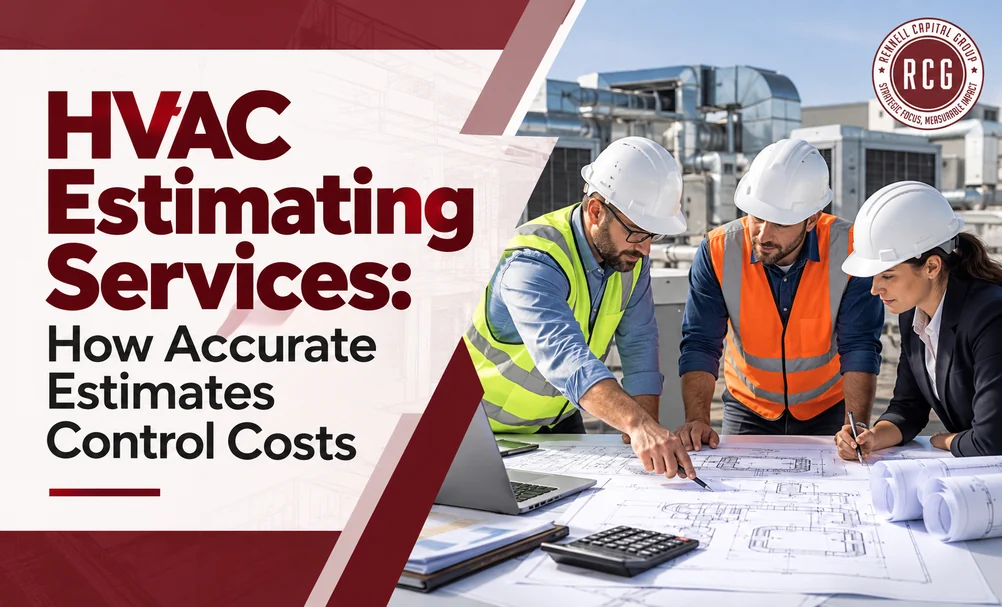
HVAC estimating services help contractors, owners, and developers understand the expected cost of heating, ventilation, and air conditioning systems before construction begins. These services provide detailed cost estimates for materials, equipment, ductwork, piping, controls, and installation labor.
HVAC systems can take up a large part of a construction budget. Their costs depend on many things, including equipment size, material prices, system design, and labor needs. Even a small mistake in material quantities or missing equipment can increase project costs.
A detailed HVAC estimate helps project teams plan their budgets, review costs, and find possible problems early. It also helps contractors prepare better bids, order the right materials, and avoid unexpected expenses during construction.
In this guide, we explain what HVAC estimating services include, how accurate material takeoffs improve cost planning, and what factors affect HVAC project costs. You will also learn how professional estimating helps contractors and developers make better financial decisions, reduce budget risks, and keep construction spending under control.
What Are HVAC Estimating Services?
HVAC estimating services provide a detailed, itemized breakdown of the costs associated with installing or replacing a heating, ventilation, and air-conditioning system. Rather than offering a rough price per square foot, a professional HVAC cost estimate accounts for every component shown on the mechanical drawings equipment, ductwork, piping, controls, and labor and prices each one individually.
These services are used by mechanical contractors, general contractors, developers, owners, and construction managers who need a reliable number to plan around, whether that’s for an early budget, a competitive bid, or a procurement decision. The key difference between HVAC estimating and a simple rough price is detail: an estimate reflects the actual scope of the drawings, while a rough price is often little more than an educated guess.
What Is Included in an HVAC Cost Estimate?
A complete HVAC estimate pulls together several distinct cost categories, each requiring its own expertise.
HVAC Equipment
This includes air handling units (AHUs), rooftop units (RTUs), chillers, boilers, VAV boxes, fans, and pumps all priced using current supplier quotes rather than outdated catalog pricing.
Ductwork and Sheet Metal
Ductwork is typically the largest cost component of an HVAC scope. The estimate accounts for duct sizes, gauges, fittings, transitions, dampers, grilles, diffusers, insulation, and hanger supports.
HVAC Piping
On projects with chilled water, hot water, refrigerant, or condensate systems, the estimate includes pipe quantities by material and size, along with fittings, valves, and insulation.
Controls and BAS
Thermostats, sensors, and building automation system (BAS) controls are often specified separately from the mechanical drawings, which makes them easy to miss if they aren’t deliberately reviewed.
Labor Costs
Installation hours, fabrication time, local labor rates, and project conditions such as ceiling access or coordination with other trades all factor into accurate labor pricing.
How HVAC Estimating Services Help Control Construction Costs
Accurate HVAC estimating doesn’t eliminate every budget risk, but it significantly improves cost visibility throughout a project. A detailed estimate creates a clear cost baseline, helps identify missing scope early, and reduces material quantity errors before they turn into change orders.
Estimating also strengthens labor planning, makes it easier to compare competing bids on equal terms, and highlights which systems are driving the most cost. For owners and contractors managing procurement, this level of detail supports smarter purchasing decisions and helps avoid the kind of unexpected costs that erode margins mid-project.
Why an Accurate HVAC Quantity Takeoff Matters
Every HVAC estimate starts with a quantity takeoff the process of measuring and counting every mechanical component shown on the drawings. The relationship works like this: drawings lead to a quantity takeoff, which leads to pricing, which produces the HVAC estimate, which shapes the overall project budget.
A thorough HVAC takeoff accounts for duct lengths and sizes, pipe lengths, fittings, equipment counts, diffusers and grilles, insulation, dampers, and support accessories. If the takeoff is incomplete, every number that follows pricing, labor, and the final budget inherits that error. This is also why HVAC estimating pairs naturally with broader MEP quantity takeoff services, since mechanical systems rarely exist in isolation from electrical and plumbing scope.
Common HVAC Estimating Mistakes That Increase Costs
Even experienced teams can run into estimating errors that quietly inflate project costs.
Missing Ductwork or Fittings
Ductwork quantities are notoriously difficult to estimate from drawings alone, and overlooking fitting complexity often leads to underestimating the sheet metal scope.
Using Outdated Material Prices
HVAC equipment pricing shifts frequently. Relying on old catalog numbers instead of current supplier quotes can create significant cost gaps.
Underestimating Labor
Complex systems like VAV and chilled water installations require more labor than standard constant-volume systems, and applying generic productivity rates often underestimates the real cost.
Missing Controls and BAS Scope
Because controls are frequently specified separately from the mechanical drawings, this scope is one of the most commonly missed cost categories.
Overlooking Testing and Balancing
Testing, adjusting, and balancing (TAB) is required on nearly every commercial project but isn’t always shown on the drawings, making it easy to forget.
Missing Drawing or Specification Changes
Late-stage design changes that don’t get reflected in the estimate can leave a significant gap between the budget and the actual scope.
How Accurate HVAC Estimates Improve Contractor Bids
HVAC bid estimating requires a careful balance. Underestimating a project might help win the job, but it puts profit margins at risk once real costs surface. Overestimating protects margin but can make a bid less competitive. Accurate HVAC estimating gives contractors a stronger foundation for bids that are both competitive and financially sound, improving long-term profitability rather than just short-term win rates.
How HVAC Material and Labor Costs Affect the Estimate
Material and equipment costs depend on system type, quantities, specifications, and current supplier pricing. Labor costs, by contrast, depend heavily on project complexity, site conditions, local labor rates, crew productivity, and fabrication requirements. Because labor assumptions carry significant estimating risk, this category deserves just as much scrutiny as material pricing if not more.
HVAC Estimating for Commercial and Complex Buildings
Commercial and institutional projects office buildings, healthcare facilities, laboratories, data centers, educational buildings, multifamily developments, and industrial facilities require significantly more detailed estimating than simple residential systems. These buildings often involve multi-zone HVAC systems, complex controls, and tighter coordination with other trades, all of which increase both the technical difficulty and the financial stakes of getting the estimate right.
When Should You Use Professional HVAC Estimating Services?
Professional HVAC estimating adds the most value during early cost planning, preconstruction, and bid preparation. It’s also useful when reviewing a large or complex HVAC scope, when in-house estimating resources are limited, when an independent second opinion is needed, or when design changes require budget validation.
How to Choose an HVAC Estimating Company
When evaluating an HVAC estimating partner, look for proven mechanical and HVAC experience, strong takeoff capabilities, and familiarity with MEP drawings. Clear, well-documented assumptions matter just as much as the numbers themselves along with detailed labor and material breakdowns, a solid quality-control process, current cost data, and deliverables that are easy to review and verify.
Frequently Asked Questions
What are HVAC estimating services?
HVAC estimating services calculate the material, equipment, labor, and related costs required to install or replace a heating, ventilation, and air-conditioning system before construction or bidding begins.
What is included in an HVAC estimate?
A complete estimate includes equipment, ductwork, piping, controls, labor, and related accessories, each priced using current quantities and market data.
How is HVAC estimating different from an HVAC takeoff?
A takeoff measures and counts quantities from the drawings. An estimate applies pricing and labor to those quantities to produce a full project cost.
Why is accurate HVAC estimating important?
Accurate estimating reduces the risk of missed scope, cost overruns, and bidding errors, giving project teams a more reliable basis for budgeting and decision-making.
How long does an HVAC estimate take?
Turnaround time depends on project size and complexity, but most professional HVAC estimating services deliver results within a few business days.
Who needs professional HVAC estimating services?
Mechanical contractors, general contractors, developers, owners, and construction managers all rely on professional HVAC estimating to support budgeting, bidding, and procurement decisions.
Let’s Wrap This Up
Accurate HVAC estimating helps contractors, owners, and developers understand project costs before construction begins. It gives the project team a clear picture of material quantities, equipment prices, labor needs, and other costs that may affect the budget.
A good estimate starts with a careful review of drawings and project requirements. Every part of the HVAC system matters, from ductwork and piping to equipment, controls, and installation labor. Missing even a small item can lead to extra costs later.
Professional HVAC estimating services help teams prepare realistic budgets, compare costs, plan material purchases, and create better contractor bids. Regular cost reviews also help identify changes early and reduce the risk of unexpected expenses during construction.
Rennell Capital Group provides professional mechanical, electrical, plumbing, and fire protection (MEP/FP) estimating support for commercial construction projects. Our team carefully reviews project details and prepares clear cost information to help owners, developers, and contractors make better financial decisions.
Whether you are planning a new building, preparing a construction bid, or reviewing an existing budget, accurate estimating can make a real difference.
Need help with your next HVAC project? Contact Rennell Capital Group today to discuss your estimating needs and project goals.

Looking for fresh content?
Get articles and insights from our weekly newsletter.
Recent Posts
Discuss a Project today!