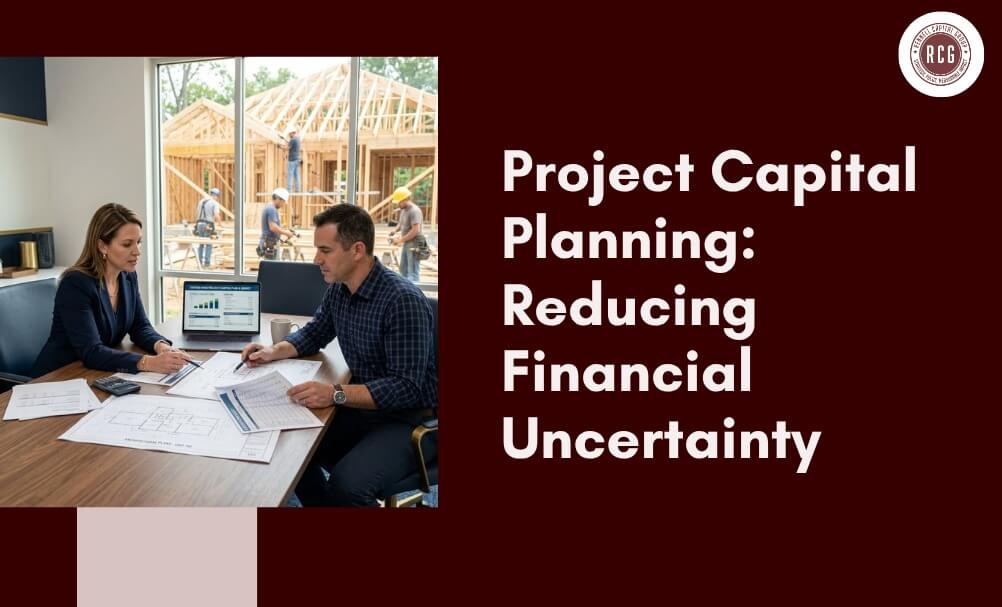
Project capital planning demonstrates where, when, and how much cash is anticipated to be necessary for a project, and where potential funding risks may exist. A good plan can help reduce uncertainty in the years leading up to construction, as well as during the construction process.
Development projects often experience volatility in their cost structures, schedules, and funding needs. An insufficient financial plan means even the smallest change in a project can and will affect the fund balance. As a result, a project team may be forced to put a halt to their work, change the project scope, or make last-minute decisions that the team had not planned for.
Capital planning helps show expected project costs and cash inflows. Capital planning also allows teams to prepare in advance for unforeseen costs. This helps teams control spending, review budgets, and make decisions during each phase of the project process.
This guide will show you how project capital planning works, why it is important, and what the key elements of a good project capital plan are. You will learn how to manage the capital of a project efficiently from the planning stages to the end of the project, and how to minimize project financial risks.
What Is Project Capital Planning?
Project capital planning helps organize all financial elements of a development project. This includes estimating costs, acquiring financing, and maintaining cash flow and preparing for contingencies.
Funding is only a small component of the work that goes into capital planning. Capital planning is about planning the use of funds and ensuring the availability of funds at all times, in all of the different phases of a project.
Capital planning integrates 4 core financial components:
- Budgeting: Project cost estimation and control
- Funding: Financing source identification and acquisition
- Cash flow: Management of cash inflows and outflows
- Financial control: Spending and performance control
Better project capital planning provides confidence to developers in their decision-making.
Why Project Capital Planning Reduces Financial Uncertainty
Creates More Accurate Budgets
Budgets built without proper research tend to be optimistic. They miss costs, underestimate complexity, and leave no room for surprises. A structured capital planning strategy forces teams to examine every cost category in detail from land acquisition and design fees to construction, permits, and contingencies.
The result is a budget that reflects reality, not just expectations. And when the budget is accurate, it’s far easier to measure performance against it.
Supports Better Cash Flow Planning
Cash flow is the lifeblood of any development project. A project can be profitable on paper and still run into serious trouble if money isn’t available when it’s needed. Construction financial planning requires mapping out when payments are due, when funding will be drawn down, and where gaps might appear.
Identifying those gaps early gives teams time to act. That might mean adjusting draw schedules, arranging bridging finance, or restructuring payment terms with contractors. None of those options are easy to execute under pressure but with early planning, they’re manageable.
Helps Manage Project Risks
Every project carries risk. The question is whether those risks have been identified, quantified, and planned for. The Project Management Institute (PMI) emphasizes that proactive risk management is one of the strongest predictors of project success. Without it, teams are left reacting to problems that could have been anticipated.
A strong capital planning process includes risk assessment as a core component not an afterthought. This means identifying financial vulnerabilities early and building strategies to manage them before they become costly.
Improves Financial Decision-Making
Good decisions require good information. When developers have a clear picture of their project’s financial position budgets, cash flow forecasts, funding commitments, and risk exposure they can make faster, more confident decisions at every stage.
Without that clarity, decisions get delayed. Opportunities get missed. And teams often find themselves making reactive choices rather than strategic ones.
Key Components of Project Capital Planning
Development Budgeting
Development budgeting involves building a detailed, line-by-line estimate of all costs associated with the project. This goes beyond construction costs to include land, professional fees, financing costs, holding costs, taxes, and other project-specific expenses.
Accurate development budgeting sets the financial baseline for everything else in the capital plan.
Capital Allocation Planning
Once the total cost picture is clear, capital allocation planning determines how funds are distributed across different parts of the project. According to the Corporate Finance Institute (CFI), thoughtful capital allocation directing resources toward areas of highest priority and return is a core principle of sound financial management.
In a development context, this means deciding which costs are funded from equity, which are financed through debt, and how funds are released as the project progresses.
Funding Strategy
A project funding strategy outlines the sources of capital that will finance the development. This might include equity contributions, construction loans, mezzanine finance, government grants, or presale proceeds. The right mix depends on the project type, risk profile, and the developer’s financial position.
A well-structured funding strategy reduces dependence on any single source and gives the project resilience if one funding stream is delayed or reduced.
Cash Flow Forecasting
Cash flow forecasting maps out the timing of all project inflows and outflows over the construction period. It identifies when costs will peak, when funding will be needed, and where cash shortfalls might occur.
This is one of the most practical tools in construction financial planning. A detailed cash flow forecast allows teams to plan ahead rather than scramble when funds run short.
Contingency Planning
No project goes exactly to plan. Material prices move. Scopes change. Weather causes delays. Contingency planning sets aside a financial reserve typically a percentage of total project cost to cover unforeseen expenses without derailing the broader budget.
The size of the contingency should reflect the complexity and risk level of the project. A well-calibrated contingency is not a sign of poor planning. It’s a sign of honest planning.
Financial Performance Monitoring
A capital plan isn’t a document that gets filed away after it’s written. It needs to be actively monitored throughout the project. Regular financial reviews track actual spending against the budget, flag variances early, and give project teams the chance to course-correct before small issues become large ones.
Consistent monitoring is what keeps the plan relevant and the project financially on track.
Common Causes of Financial Uncertainty in Construction Projects
Understanding what causes financial uncertainty is just as important as knowing how to plan around it.
Cost Overruns
Cost overruns happen when actual spending exceeds the approved budget. They’re often the result of incomplete cost estimates, scope changes, or poor budget management. Strong project financial management reduces this risk by establishing clear baselines and monitoring performance against them.
Funding Delays
Delays in securing or drawing down funding can bring a project to a halt, even when costs are under control. A robust project funding strategy includes fallback options and early engagement with lenders and investors.
Material Price Changes
Construction materials steel, timber, concrete can experience significant price swings due to supply chain disruptions or market conditions. Budgets that don’t account for price escalation are especially vulnerable.
Schedule Delays
Time is money in development. When a project runs over its scheduled timeline, holding costs increase, interest accumulates, and presale commitments can come under pressure. Cash flow planning helps quantify the financial impact of schedule delays before they occur.
Unexpected Site Conditions
Contaminated soil, poor ground conditions, or hidden infrastructure can add significant unplanned costs. Thorough due diligence and adequate contingency reserves are the primary defenses against this risk.
Poor Financial Planning
Ultimately, many of the challenges listed above become harder to manage when the foundational financial planning hasn’t been done well. Incomplete budgets, inadequate contingencies, and weak monitoring create the conditions for financial uncertainty to take hold.
A Step-by-Step Project Capital Planning Process
Step 1: Define Project Objectives
Start by establishing clear goals for the project what it aims to deliver, who it serves, and what financial outcomes are expected. These objectives shape every financial decision that follows.
Step 2: Estimate Total Development Costs
Build a comprehensive cost estimate covering all phases of the project, from pre-development through to practical completion. Include hard costs, soft costs, financing costs, and a realistic contingency allowance.
Step 3: Build a Funding Plan
Identify the sources of capital that will fund the project and confirm their availability, timing, and conditions. Structure the funding mix to balance cost, risk, and flexibility.
Step 4: Forecast Cash Flow
Develop a month-by-month cash flow forecast that maps project expenditure against funding drawdowns and expected revenue. Use this forecast to identify and address potential shortfalls in advance.
Step 5: Create Contingency Reserves
Establish contingency reserves appropriate to the project’s risk profile. Document what conditions would trigger their use and how they will be managed.
Step 6: Monitor and Adjust Financial Performance
Implement regular financial reporting throughout the project. Compare actual performance against the plan, investigate variances, and update forecasts as conditions change.
How Project Capital Planning Supports Better Investment Decisions
A well-executed capital plan does more than manage costs it creates conditions for better investment decisions throughout the project lifecycle.
Strong development budgeting and capital allocation planning give developers a clear view of where money is going and whether it’s generating the expected return. That clarity allows teams to make smarter spending decisions, prioritize high-value activities, and redirect resources when circumstances change.
Financial planning for projects also supports better conversations with lenders and investors. When a developer can present a detailed, credible financial plan, it builds confidence. It demonstrates that the project has been properly evaluated and that risks have been considered not ignored.
Effective project financial management also creates financial flexibility. Teams that monitor performance closely are better positioned to adapt when the unexpected happens, rather than being caught flat-footed by a cash crisis.
Common Mistakes Developers Should Avoid
Underestimating Costs
Optimistic cost estimates are a leading cause of budget blowouts. Build budgets based on verified data and realistic assumptions, not best-case scenarios.
Ignoring Cash Flow
A budget without a cash flow plan is incomplete. Even projects with healthy overall budgets can face serious problems if cash isn’t available at the right times.
Weak Budget Monitoring
Setting a budget and then rarely checking it is a recipe for cost overruns. Regular monitoring is essential to keep spending on track.
Insufficient Contingency Funds
Underfunded contingencies leave projects exposed. Contingency reserves should be calculated based on genuine risk assessment, not an arbitrary percentage.
Delaying Financial Reviews
Financial reviews that are postponed or skipped allow small variances to compound into large problems. Build structured review cycles into the project schedule from the outset.
The Relationship Between Capital Planning and Long-Term Project Success
Development capital planning and long-term project success are closely linked. Projects that take financial planning seriously from the start tend to be more stable, more efficient, and better equipped to handle change.
A sound capital planning strategy reduces uncertainty not by eliminating risk, but by ensuring that risks are understood and accounted for. This creates an environment where decisions are grounded in data rather than guesswork, and where teams can respond to challenges without losing financial control.
Over time, developers who build strong financial planning practices into their processes develop a meaningful competitive advantage. They complete projects more consistently, build stronger relationships with financiers, and are better positioned to take on more complex opportunities.
Why Professional Capital Advisory Matters
Even experienced developers can benefit from an outside view of project finances. A professional capital advisory team can help review budgets, study funding needs, and keep financial plans organized as the project moves forward.
Capital advisory involves more than just crunching numbers. Advisors assist owners and project teams in understanding how each financial choice impacts the project. Advisors assess costs, funding, cash flow deficits, and potential issues. It is easier to identify potential budgetary and scheduling concerns when an advisor has a command of both finance and construction.
The conditions on a project site may change during the construction process. The cost may increase, and the original construction schedule may result in other downstream schedule impacts. The financial implications of these changes need to be addressed. Regular financial assessments allow teams to be nimble and respond to changes. Capital advisors can help make changes to the capital plan to bring it in line with the current needs of the project.
Closing Thoughts
Financial uncertainty can affect every stage of a development from early planning decisions to final completion. But it doesn’t have to. A well-structured approach to project capital planning gives developers a clearer understanding of costs, funding requirements, cash flow, and risk before critical decisions are made.
When financial planning is treated as an essential part of the development process, projects are better prepared to stay on budget, adapt to change, and achieve long-term success.
Give Rennell Capital Group a call. Our Capital Advisory team works with developers, investors, contractors, and property owners to create practical financial strategies that support confident decision-making. Through detailed planning, capital analysis, and project oversight, we help clients reduce uncertainty and build stronger foundations for successful developments.
Connect with the RCG Capital Advisory team to discuss how we can support your next project.
Frequently Asked Questions
What is project capital planning?
Project capital planning is the process of planning and managing the money needed for a development project. It includes estimating costs, creating a budget, planning funding needs, tracking cash flow, preparing for unexpected costs, and reviewing spending as the project moves forward.
Why is project capital planning important before construction begins?
Project capital planning helps developers understand their financial needs before work starts. A clear plan can show how much the project may cost, when money will be needed, and where financial risks may appear. This can help reduce funding gaps, budget problems, and rushed financial decisions later.
What is the difference between a project budget and a capital plan?
A project budget shows the expected costs of a project. A capital plan covers more details. It explains how costs may be funded, when funds will be needed, how cash flow will be managed, and how financial risks and spending will be reviewed.
How much contingency should be included in a development budget?
There is no single contingency amount that works for every project. The right amount depends on the project size, design, location, construction needs, and possible risks. Developers should review these factors carefully and set a contingency that fits the specific project.
When should a developer engage a capital advisory team?
It can be helpful to involve a capital advisory team during the early planning or feasibility stage. Early support gives the team more time to review costs, plan funding needs, study financial risks, and build a clear capital plan before major project decisions are made.

Looking for fresh content?
Get articles and insights from our weekly newsletter.
Recent Posts



Discuss a Project today!