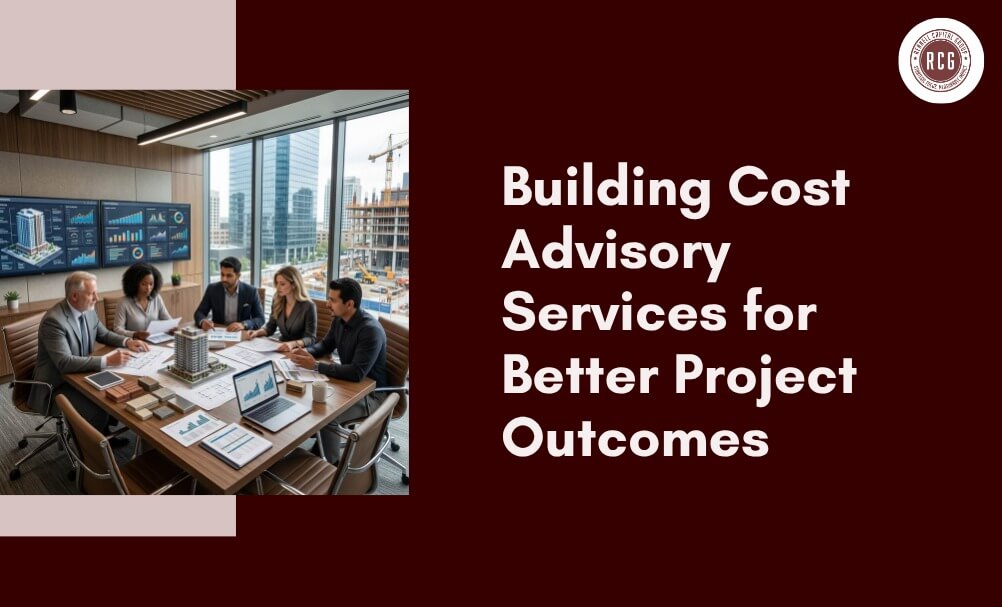
Building cost advisory services inform the possible costs of a project from design through to completion, helping owners and developers understand and manage construction costs. They offer cost frameworks to provide clarity to project teams to assist in budget decisions and cost control, while mitigating financial risks.
The construction budget is volatile and can change countless times before a project is complete. Factors such as the design, cost of materials, the cost of labor, changes in the scope of work, and contractor offers, just to name a few, can all affect the budget. If a project budget is not reviewed regularly, a small budget item can easily turn into a large budget problem.
A building cost advisor would review budgets and track changes to identify possible cost risks on the project. By providing estimates of project costs, building cost advisors assist owners and developers in determining the project budget, with potential cost implications and allowances.
In this article, we describe building cost advisory services and how they assist clients with controlling costs. We also describe the benefits of professional cost advice, how cost advice planning can guide a project to better outcomes and longer-term value, and how cost advice can assist a client with controlling costs.
What Are Building Cost Advisory Services?
Building cost advisory services provide professional guidance on construction budgets, estimates, cost risks, market pricing, procurement, and financial decisions throughout a building project. Cost advisors help owners and developers understand expected costs, validate estimates, monitor budgets, and make informed decisions from early planning through construction.
The scope of advisory work is broader than a single deliverable. A cost advisor may be involved in:
- Budget development — establishing realistic cost targets at each project stage
- Cost estimating — calculating expected costs based on scope, quantities, and current market pricing
- Cost validation — reviewing contractor estimates and bid pricing for accuracy and completeness
- Cost forecasting — projecting where costs are heading as the design evolves
- Risk assessment — identifying budget exposures before they become expensive problems
- Value engineering — evaluating design alternatives that deliver the same function at lower cost
- Procurement advice — guiding bid strategy and contract structure to support competitive, accurate pricing
- Cost monitoring — tracking changes and their budget impact throughout construction
- Change management — analyzing change orders and their effect on the approved budget
Each of these activities feeds into the same goal: giving decision-makers the cost clarity they need at every stage.
Why Building Cost Advisory Matters for Project Success
Construction projects rarely fail because of one catastrophic mistake. More often, a series of smaller cost gaps, unchecked assumptions, and late-stage surprises compound into something unmanageable. Building cost advisory services interrupt that pattern by creating visibility and accountability at every step.
Better Budget Visibility
Owners gain a clear picture of where project capital is being allocated and why. Rather than receiving a single estimate and hoping it holds, they track costs in real time as decisions are made. That clarity supports financing conversations, stakeholder reporting, and internal approvals.
Earlier Cost Risk Identification
Potential scope gaps, design conflicts, pricing volatility, and procurement risks surface while they’re still inexpensive to address. As RCG’s work on preconstruction cost planning demonstrates, catching issues during planning costs a fraction of what it takes to resolve the same problems during construction.
Better Decision-Making
When owners can evaluate design alternatives using reliable cost data, they make better trade-offs. Should the building envelope be upgraded? Should mechanical systems be value-engineered? These decisions improve significantly when they’re grounded in numbers rather than intuition.
Stronger Project Control
A well-developed cost baseline makes it possible to measure the financial impact of every subsequent change. Without that baseline, project teams often discover budget problems only after they’ve grown too large to absorb.
What Does a Building Cost Advisor Do?
This is the question most owners ask first, and for good reason. The role touches nearly every phase of a project.
Develop and Review Project Budgets
Advisors build cost plans from the earliest program stage through detailed design. Early budgets rely on benchmarks and historical data. As drawings mature, those figures are refined with actual quantities and current market pricing. The goal at every stage is a budget that reflects reality, not optimism.
Review Construction Estimates
When a design team, contractor, or subcontractor submits an estimate, an independent cost advisor reviews the underlying assumptions, quantities, scope inclusions, and unit rates. This review catches errors, challenges unsupported figures, and confirms that nothing important has been left out.
Monitor Market Conditions
Labor rates, material costs, equipment pricing, and escalation trends all affect what a project will actually cost. Advisors track these variables and adjust forecasts accordingly, particularly for projects with long lead times or complex procurement requirements.
Identify Cost Risks
Before a budget exposure becomes a change order, a skilled advisor should be naming it. Common risks include incomplete scope, design changes, quantity errors, supply chain disruptions, labor shortages, and underestimated MEP/FP system complexity. Identifying them early gives the project team time to plan a response.
Support Value Engineering
Value engineering is not about cutting quality. It’s about evaluating whether the specified approach delivers the best value for the budget. Advisors facilitate this analysis by modeling alternatives and weighing upfront cost against long-term performance—without defaulting to the cheapest option.
Track Cost Changes
Every design revision, scope addition, or procurement decision carries a cost implication. Advisors monitor these changes as they accumulate, keeping the approved budget current and flagging when the project is trending off course.
Building Cost Advisory vs. Construction Cost Estimating
Cost estimating and cost advisory are closely related but serve different purposes. Understanding the distinction helps owners choose the right level of support.
| Construction Cost Estimating | Building Cost Advisory |
|---|---|
| Calculates expected construction costs | Guides broader cost decisions |
| Often focused on a specific project phase | Can span the full project lifecycle |
| Quantifies labor and materials | Reviews budgets, risks, and alternatives |
| Produces an estimate | Interprets and validates cost information |
| Supports bidding and budgeting | Supports strategic owner decisions |
Estimating is an important component of cost advisory, but advisory services carry a wider strategic role. A construction cost estimating engagement answers, “What will this cost?” A cost advisory relationship answers, “What should we do about it, and what are the risks if we don’t?”
Key Stages of Building Cost Advisory Services
One of the most important things to understand about building cost advisory is that it’s an ongoing process, not a one-time estimate.
Feasibility and Concept Planning
At the earliest stage, advisors develop preliminary budgets based on program requirements, building type, and market benchmarks. This supports project feasibility analysis, helps owners set realistic capital targets, and informs go/no-go decisions before significant design investment is made.
Schematic Design
As the design begins to take shape, cost planning becomes more specific. Advisors prepare conceptual estimates, evaluate design alternatives, and flag areas where the current direction creates budget pressure. The goal is to keep design and budget aligned from the start.
Design Development
With more detailed drawings available, advisors conduct quantity-based cost analysis, update the cost plan, and introduce design phase cost analysis to review MEP/FP systems, structural choices, and finishes against the approved budget. Value engineering opportunities are evaluated here, while changes are still easy to make.
Preconstruction and Procurement
Before contracts are signed, advisors review contractor estimates, analyze bids, validate pricing, and advise on procurement strategy. This stage is critical for cost validation, confirming that the bids received are complete, competitive, and aligned with the project scope. Preconstruction cost planning at this stage sets the financial baseline that all subsequent progress will be measured against.
Construction
During construction, advisors monitor change orders, track cost commitments, update forecasts, and prepare regular budget reports. This ongoing oversight keeps the project team informed and helps prevent small variances from compounding into significant overruns.
How Building Cost Advisors Identify and Manage Cost Risks
No advisor can predict every problem a construction project will encounter. What a skilled advisor can do is improve visibility into foreseeable financial risks and help teams prepare for them.
Common risks that advisors identify include:
- Incomplete or ambiguous project scope
- Design changes that ripple through multiple cost categories
- Quantity errors in early estimates
- Material price volatility and supply chain uncertainty
- Labor escalation and trade availability issues
- Procurement delays affecting schedule and cost
- Unrealistic allowances for complex systems or finishes
- Insufficient contingencies relative to actual project risk
- MEP/FP coordination issues that generate expensive rework
- Change orders that accumulate faster than the contingency can absorb
Identifying these risks doesn’t eliminate them. But it gives the project team the information they need to plan contingencies, adjust scope, revise procurement strategy, or communicate realistic expectations to stakeholders before those risks become crises.
The Role of MEP/FP Estimating in Building Cost Advisory
MEP/FP estimating is an important part of building cost planning. Mechanical, electrical, plumbing, and fire protection systems can account for about 30% to 45% of total construction costs on many commercial projects. In complex facilities, such as hospitals, laboratories, and data centers, these costs may reach 55% or more.
Because these systems represent a large part of the budget, each one should be reviewed carefully. Using one general cost allowance may not provide enough detail.
- HVAC systems: Equipment, ductwork, distribution, and installation labor.
- Electrical systems: Power service, wiring, lighting, panels, and controls.
- Plumbing systems: Water supply, drainage, piping, and special plumbing needs.
- Fire protection: Sprinklers, alarms, detection systems, and safety requirements.
- Equipment and controls: Building controls, switchgear, and mechanical equipment.
- Installation labor: Local labor rates, crew size, work hours, and productivity.
Accurate MEP budget estimating should continue as the design develops. Costs can change as drawings, equipment, quantities, and project requirements change. Reviewing MEP/FP costs at each major design stage helps owners maintain a more accurate budget and make better cost decisions.
Also Read: MEP Budget Estimating: Planning Costs with Accuracy
How Cost Advisory Supports Better Design Decisions
Every design decision carries a cost implication. The challenge is that most of those implications aren’t immediately obvious to the people making the decisions. A cost advisor bridges that gap.
During design, advisors can model the cost impact of:
- Structural system alternatives
- Building envelope options
- Mechanical and electrical system choices
- Material specifications and substitutions
- Equipment selections
- Finish levels and interior specifications
- Energy efficiency measures and their long-term payback
- Constructability considerations that affect labor cost
Cost advisory is particularly valuable while design decisions remain flexible before drawings are completed, before specifications are locked, and before procurement begins. Once construction is underway, the cost of changing direction multiplies rapidly. RCG’s work on design phase cost analysis underlines the same principle: the earlier cost information enters the design conversation, the more value it creates.
Building Cost Advisory and Long-Term Project Value
Building cost advisory is not only about controlling the cost of construction. It also helps owners and developers understand how today’s choices may affect the building’s costs for many years.
A product or system with a lower price may seem like a good choice at first. However, it could cost more to operate, repair, maintain, or replace later. For example, a cheaper HVAC system may reduce the starting budget but lead to higher energy and maintenance costs over time.
This is why cost advisory works closely with lifecycle cost planning. It looks at construction costs along with energy use, maintenance, repairs, equipment replacement, and other future expenses.
Cost advisors can compare different options and show owners how each choice may affect long-term spending. This gives project teams better information before making major decisions. The lowest upfront price is not always the best value. Looking at both current and future costs can help protect the budget and support stronger long-term project value.
Who Benefits From Building Cost Advisory Services?
Building cost advisory creates value for multiple stakeholders, each in different ways.
Owners gain budget visibility, independent cost information, and the confidence to make capital decisions based on data rather than assumptions.
Developers benefit from better feasibility analysis, more reliable pro formas, and cost-informed design guidance that protects project returns.
Contractors receive clearer scope documentation and more accurate cost baselines, which support competitive bidding and reduce the risk of expensive disputes.
Investors get greater clarity around capital requirements, contingency levels, and financial risk exposure before committing funds.
Architects and design teams receive cost feedback while design options are still flexible, allowing them to optimize for both performance and budget without making compromises late in the process.
When Should You Hire a Building Cost Advisor?
The practical signals that suggest it’s time to engage a cost advisor include:
- Before committing major capital to a project
- When developing an early construction budget for feasibility purposes
- When the design is evolving rapidly and cost impacts are unclear
- When contractor or design team estimates differ significantly from each other
- When MEP/FP scope is technically complex or involves specialized systems
- When material prices are volatile and the procurement timeline is long
- Before major bid events or procurement decisions
- When project costs are trending away from the approved budget
- When an independent cost review is required by a lender, investor, or board
Earlier engagement almost always produces better outcomes. The closer a project is to construction, the fewer options remain for managing cost risk.
How to Choose the Right Building Cost Advisory Services Partner
The right partner brings a specific combination of skills and experience. When evaluating options, look for:
- Proven construction cost estimating expertise across relevant building types
- Dedicated MEP/FP cost knowledge, not just general construction experience
- Experience across multiple project stages, from feasibility through construction
- A track record of independent analysis that isn’t influenced by contractor relationships
- Current market pricing knowledge and access to reliable cost data
- Quantity takeoff capabilities that support detailed, defensible estimates
- Clear, transparent reporting that decision-makers can actually use
- Ability to work effectively with owners, design teams, and contractors
- Experience advising on projects of comparable scope and complexity
Independence matters. An advisor who has no stake in the construction outcome provides cost information that owners can trust.
The Bottom Line
Consistent and accurate cost data enables optimal decisions when constructing any project. Building cost advisory services enable owners/developers to define the costs of their projects throughout the planning, design, tendering, and construction phases.
Regular cost reviews enable the project teams to identify potential risks that may impact the budget. They are also able to benchmark the estimates, consider the alternatives based on the design choices, assess the tenders, and manage the project budget.
The Rennell Capital Group provides MEP/FP estimating and construction cost services for both owners and contractors. Our meticulous review of project cost information enables us to provide cost information that is accurate and helpful in making informed decisions.
Are you beginning a new construction project or just reviewing your budget? We can assist you with cost planning. We can assist you in reducing financial risk and making more informed decisions during your project.
Frequently Asked Questions
What are building cost advisory services?
Building cost advisory services help owners and developers plan, review, and control construction costs. Advisors review budgets, estimates, market prices, and possible cost risks. They also help teams understand where money is being spent and make better financial decisions from early planning through construction.
What does a building cost advisor do?
A building cost advisor reviews budgets, estimates, design choices, material prices, and project risks. They can also compare costs, support value engineering, and track budget changes. Their goal is to give owners clear cost information so they can make informed decisions.
How do building cost advisory services improve project outcomes?
Building cost advisory services improve cost visibility and help find budget problems early. Advisors can review estimates, compare design options, check pricing, and track changes. This helps project teams manage costs, reduce financial surprises, and make better choices throughout the project.
What is the difference between cost estimating and cost advisory?
Cost estimating calculates how much a construction project may cost. Cost advisory goes further by reviewing those estimates, identifying risks, tracking budget changes, and supporting financial decisions. Estimating is one important part of the wider cost advisory process.
When should an owner hire a construction cost advisor?
Owners should consider hiring a cost advisor during early planning or design. Early support gives the team more time to find cost risks and adjust the budget. An advisor can also help when bids vary widely or the project has complex MEP/FP systems.
Can building cost advisory services help prevent budget overruns?
Yes. Building cost advisory services can help reduce the risk of budget overruns. Regular cost reviews can identify pricing issues, design changes, missing costs, and other risks early. While unexpected costs can still occur, good cost planning makes them easier to manage.

Looking for fresh content?
Get articles and insights from our weekly newsletter.
Recent Posts
Discuss a Project today!